
.
Listings

Designed by the architect Amedeo di Castellamonte at the behest of Duke Carlo Emanuele II who wanted to make it his hunting lodge and built in a very short time, from 1658 to 1679, the Reggia di Venaria is certainly one of the largest and most beautiful Savoy residences. Imposing, sumptuous, his project was resumed for the construction of the palace par excellence, that of Versailles. The Reggia di Venaria has been part of the UNESCO World Heritage Site since 1997. The complex, of which the palace is part, consists of approximately 80,000 m2 of walkable land, including the park and the historic village of Venaria. The village was later joined by other houses and palaces of ordinary citizens who wanted to live in the surroundings of the Royal Palace, until Venaria Reale became an independent municipality in the province of Turin. The palace gardens were lost due to Napoleon's French who transformed them into a parade ground. Only later were the restoration works of the surrounding natural setting resumed. Since 2007, after eight years of restorations, the splendid gardens of the palace complex of Venaria represent the flagship of this magnificent construction with the spaces of the English Gardens, that of Flowers and Roses, and the area of the groves. At the beginning of the eighteenth century Filippo Juvarra worked on the complex and in particular on the construction of the Grand Gallery and at the same time of the Church of Sant’Uberto, set between the palaces so as not to allow the construction of the dome. The last works, which concerned the stables, the riding school, the staircase of the Diana Palace and the Sant’Uberto gallery were carried out between the second half of the eighteenth century and the beginning of the nineteenth century. Progettata dall’architetto Amedeo di Castellamonte per volontà del duca Carlo Emanuele II che voleva farne la sua residenza di caccia e costruita in pochissimo tempo, dal 1658 al 1679, la Reggia di Venaria è sicuramente una delle maggiori e più belle residenze sabaude. Imponente, fastosa, il suo progetto fu ripreso per la costruzione della reggia per antonomasia, quella di Versailles. La Reggia di Venaria fa parte dal 1997 del patrimonio dell’umanità dell’UNESCO. Il complesso, di cui fa parte la reggia, è costituito da circa 80.000 m2 di terreno calpestabile, include il parco ed il borgo storico di Venaria. Al borgo si unirono successivamente altre case e palazzi di semplici cittadini che vollero abitare nei dintorni della Reggia, fino a che Venaria Reale divenne comune autonomo della provincia di Torino. I giardini della reggia furono persi a causa dei francesi di Napoleone che li trasformarono in piazza d’armi. Solo in seguito furono ripresi i lavori di risanamento dell’ambientazione naturale circostante. Dal 2007, dopo otto anni di restauri, gli splendidi giardini del complesso della reggia di Venaria rappresentano il fiore all’occhiello di questa magnifica costruzione con gli spazi dei Giardini all’Inglese, quello dei Fiori e delle Rose, e l’area dei boschetti. Agli inizi del Settecento Filippo Juvarra lavorò al complesso e in particolare alla costruzione della Gran Galleria e parallelamente della Chiesa di Sant’Uberto, incastonata tra i palazzi tanto da non permetterne la costruzione della cupola. Gli ultimi lavori, che riguardavano le scuderie, il maneggio, la scala della Reggia di Diana e la galleria di Sant’Uberto furono realizzati tra la seconda metà del Settecento e l’inizio dell’Ottocento.

Museo d'Arte Orientale è uno dei più recenti musei di Torino. Ubicato in pieno centro, ha sede nello storico Palazzo Mazzonis e ospita una delle raccolte artistiche asiatiche più interessanti d'Italia. L'Oriente in tutta la sua bellezza artistica: una collezione che racconta alcune tra le più affascinanti culture asiatiche.
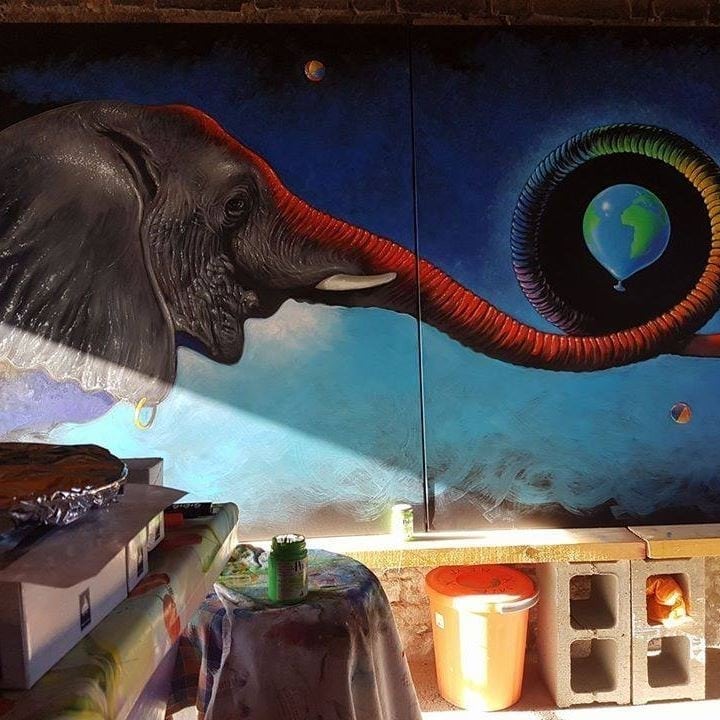
The MAU – Museum of Urban Art of Turin is the first project in the phase of concrete realization, in Italy, with the aim of creating a permanent outdoor artistic settlement located inside a large metropolitan center, with the addition the added value of being an initiative started not from above but from the base, thanks to the consent and the fundamental contribution of the inhabitants. The original nucleus of the MAU is located in the Borgo Vecchio Campidoglio, a working class district of the late 19th century, located between the Switzerland, Appio Claudio and Tassoni courses, and via Fabrizi and Cibrario, not far from the city center. A portion of urban space miraculously saved from the eviscerations operated by the Regulatory Plan of 1959, which has kept its lattice structure almost intact consisting of low houses with large internal courtyards with green areas, divided by narrow streets, all to favor the relationship of commonality between the inhabitants and a type of settlement, in a semi-central area of Turin, such as to make it a “town within the city”. Beginning in 1991, a work of revaluation of the social, urban and architectural peculiarities of the Borgo began. At a certain point, in the spring of 1995, it is considered to extend the sphere of intervention to art, involving citizens in the choices, given the initial availability of some of them, then continued over time until the current results. The Urban Redevelopment Committee invites some cultural operators in the city to provide their opinion, the Faculty of Architecture with Prof. Carla Bartolozzi, the Accademia Albertina, the artist and master of art Giacomo Soffiantino, and also the author of the present, at the time a member of the Board of Museums and Exhibitions of the City of Turin and artistic co-director of the Gallery of Modern Art, already engaged for years on the front of the relationship between art and territory. On 1 April 2014, the MAU was included in the recognized realities as part of a framework resolution on public art in Turin. Starting from the “Day of the MAU” in November 2007, our Association has strongly intensified its activities in the area by forging closer collaboration with the craft, commercial, artistic and cultural activities present. Numerous events have been organized or in which we have actively collaborated... We mention the various editions of the Grape Festival, We Camp, Campidoglio never stops, Rocciamelone Arts & Crafts by night, MAU & Co., Remembering Gianni. Street Art to Art (charity auction in memory of the artisan of the Borgo Gianni Garino), Il Borgo adopts the AISM. Borgo Campidoglio for multiple sclerosis, Campidoglio On Ice, Fuori Schema 2013/2014. More and more requests for guided tours of groups and institutions, in addition to those traditionally organized for some years with the Turin Piedmont Museum Subscription, and now also extended to the Antiaereo Refuge in Piazza Risorgimento, in collaboration with the Diffuse Museum of the Resistance.
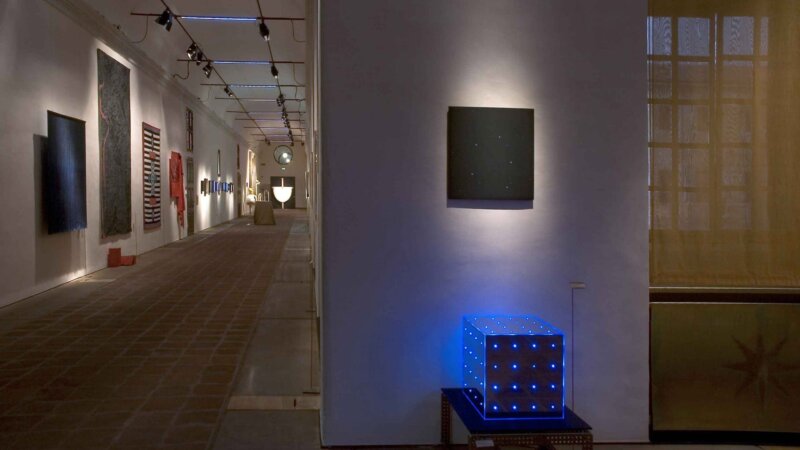
The MIAAO International Museum of Applied Arts Today is an institution belonging to the Turin museum circuit. It is the only Italian museum dedicated to contemporary applied arts and to the enhancement of manual labor. The Museum was born in the centenary of the International Exhibition of Modern Decorative Arts in Turin in 1902. The gallery on the first floor houses permanent collections: sculptures, ceramics, tapestries, jewelry, design objects, mechanical and light installations, photographs and paintings.
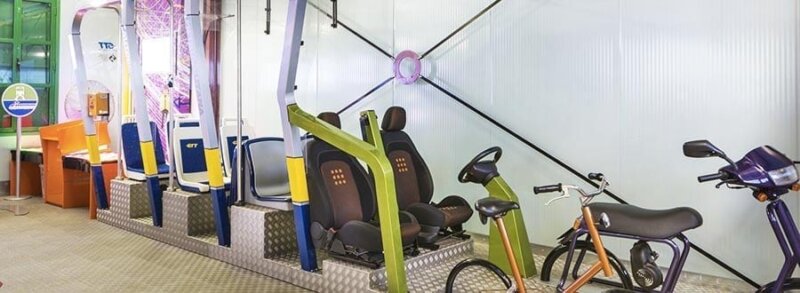
A come Ambiente è il primo museo europeo interamente dedicato alle tematiche ambientali, pensato per offrire a bambini, scuole e famiglie la possibilità di informarsi e riflettere in modo multimediale e creativo su temi attuali come l'energia, il riciclo dei materiali, l'acqua e i trasporti.

The museum Museo Civico Pietro Micca is dedicated to the siege of Turin in 1706 and to the historical figure of Pietro Micca. The building is connected to the underlying contrace tunnel system. The museum displays relics, photographs, films and models illustrating the city's defense systems and the military events of the siege of Turin in 1706, as well as the historical events that occurred before and during the Spanish succession war (1700-1713). From the exhibition rooms you can access the system of galleries of contromina of about 400 meters, which develop at 6 and 14 meters below the city floor.

From 1913 to today. A long story ours, handed down from father to son, made of experience, study, research, artistic sensitivity, passion for beauty. The reproduction of the classic piece of furniture has always been our intent to build every single piece, destined to last over time and capable of the most free combinations, in compliance with the artisan tradition of Brianza. The work done with the use of solid wood, the manual carving made by skilled artisans, the spring padding, the careful choice of fabrics are the unmistakable signs of each. exemplary.

Palazzo Madama and Casaforte degli Acaja is an architectural and historical complex located in the central Piazza Castello in Turin. It is a UNESCO World Heritage Site, as part of the Sabaude Residences serial site. A visit to Palazzo Madama is an evocative journey through time: from the foundations of the Roman age to the medieval towers, up to the baroque triumph of the Juvarra staircase.

Thanks to its strategic position near the Via Gallica, the hill of Rivoli has been inhabited by humans at least since Roman times. A fortified building, the “Castrum Riuollum,” is first mentioned in 1159. The earliest illustration, dating to 1609, shows a central tower surrounded by constructions of varying sizes, while along the foothills a garden softens the complex’s military appearance. The property of the Bishops of Turin, the Castello became part of the Savoy dominion in 1247 and remained so until 1883, the year in which it was sold to the City of Rivoli. In 1350 it was selected as the setting for the marriage of Bianca of Savoy to Galeazzo Visconti. When Emanuele Filiberto chose Turin as the new capital of the Duchy, he settled in Rivoli with his court; his heir, Carlo Emanuele, was born at the Castello on January 12, 1559, under the care and guidance of Nostradamus, who had been invited to follow the pregnancy of the Duchess Margherita of Valois. The new duke, Carlo Emanuele I, entrusted the Castellamonte architects Francesco Paciotto and Domenico Ponsello – father and son – to transform the medieval manor into a leisure residence, as illustrated on the two boards of the Theatrum Sabaudiae (Savoy Theatre), a celebration through images of the city, the fortresses, the residences and all the beauties of the Duchy. Here we see for the first time the Manica Lunga, a building designed to house the picture gallery of Carlo Emanuele I, joined to the castle by four tall towers, and the church dedicated to San Carlo Borromeo, which was never actually built. The work was completed in 1670. By this time the Castello had already hosted important events, such as the birthday celebrations of Christine of France, the second Madama Reale, held on February 10, 1645. The only hall that has survived from that period, after the French troops of Marshall Catinat burned down and destroyed most of the building in 1690 and 1693, is the room of Amedeo VIII on the second floor. Seeing the building burn from Turin, the young duke Vittorio Amedeo II promised himself that he would rebuild and make even more beautiful the residence that has always been so connected to the history of his family and which he greatly loved. In fact, it was from Rivoli that he announced his rise to the throne in 1730. In August 1979, restoration work on the Castello alone began, and would last until 1984, when it opened its doors as the Museum of Contemporary Art. This work took into account its entire past, respecting its architecture, but with modern additions like the elevator, the suspended staircase, the platform on the late 1700s vault, and the panoramic area on the third floor. From 1984 to 1986, Andrea Bruno began working on the Manica Lunga, but unfortunately a lack of funds closed down the site, which reopened only in 1996. It was in February 2000 that the building, first born to host Carlo Emanuele I’s picture gallery, refound its age-old splendor. The structure was maintained with the inclusion of the vault’s overturned hull-shaped steel cover and the steel and glass stairs joining the 17th-century structure. The large windows light up the rooms of the cafeteria, which has also become a treasure trove of works from the collection, and of other Museum services. Even the contemporaneity of the small parallel section that hosts the one-Michelin star restaurant Combal.Zero dialogues with the past, as do all elements of the Castello di Rivoli.

Palazzo Pitti è stata la residenza del Granducato di Toscana, già abitata dai Medici, dagli Asburgo-Lorena e, dopo l'Unità d'Italia, dai Savoia.Al suo interno è ospitato un complesso museale composto da gallerie e musei di diversa natura: la Galleria Palatina (la galleria d'arte conserva capolavori di Raffaello, Tiziano, ecc.) sistemata secondo il criterio della quadreria settecentesca, gli Appartamenti Reali, l'Appartamento della Duchessa d'Aosta e il Quartiere del Principe di Napoli (ordinariamente non visitabili dai turisti), la Galleria d'arte moderna (con le opere dei macchiaioli) e altri musei specializzati.

The Boboli Gardens is a historical park in the city of Florence. Born as the grand-ducal garden of Palazzo Pitti, it is also connected to the Forte di Belvedere, a military outpost for the safety of the sovereign and his family. The garden, which welcomes over 800,000 visitors every year, is one of the most important examples of Italian garden in the world and is a veritable open-air museum, for the architectural-landscape setting and for the collection of sculptures, which ranging from Roman antiquities to the twentieth century. The Boboli Gardens is one of the most famous gardens on the peninsula.

The museum of the Uffizi Gallery, constitutes for quantity and quality of the works collected one of the most important museums in the world. It contains the most important existing collection of Raffaello and Botticelli, as well as fundamental groups of works by Giotto, Tiziano, Veronese, Tintoretto, Pontormo, Bronzino, Caravaggio, Dürer, Rubens and others. Inside are housed some of the greatest masterpieces of humanity: Cimabue, Leonardo da Vinci, Michelangelo, Raphael, Mantegna, Titian, Parmigianino, Dürer, Rubens, Rembrandt, Canaletto and Sandro Botticelli.

Nel 2009, a cento anni dalla morte di Cesare Lombroso, fondatore dell’antropologia criminale, si è riallestito il “suo” museo, unico al mondo. Le collezioni comprendono preparati anatomici, disegni, fotografie, corpi di reato, scritti e produzioni artigianali e artistiche, anche di pregio, realizzate da internati nei manicomi e da carcerati. Il nuovo allestimento vuole fornire al visitatore gli strumenti concettuali per comprendere come e perché questo personaggio così controverso formulò la teoria dell’atavismo criminale e quali furono gli errori di metodo scientifico che lo portarono a fondare una scienza poi risultata errata.
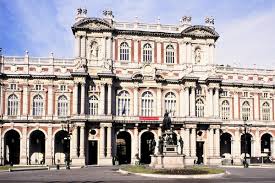
The National Museum of the Italian Risorgimento is the largest exhibition space in Italian history, the oldest and most important museum dedicated to the Italian Risorgimento. The museum, which was completely re-opened and reopened in 2011, dates back to 1878, when Turin, following the transfer of the capital, wanted to underline its contribution to the process of national unification. The National Museum of the Italian Risorgimento has been profoundly renewed, and today offers visitors outstanding displays and services in Palazzo Carignano where the collections are housed. Lighting and room colours, the choice of which is always based on the themes in question, and the use of multimedia aids guarantee visitors a unique experience. The period of the Risorgimento is now recounted from a European viewpoint as well as through the eyes of Turin, Piedmont and Italy. The rooms have been enriched with films created with images from the most important European collections and can be viewed on large screens, while extensive interactive displays help visitors to examine the themes presented in the films in greater depth.
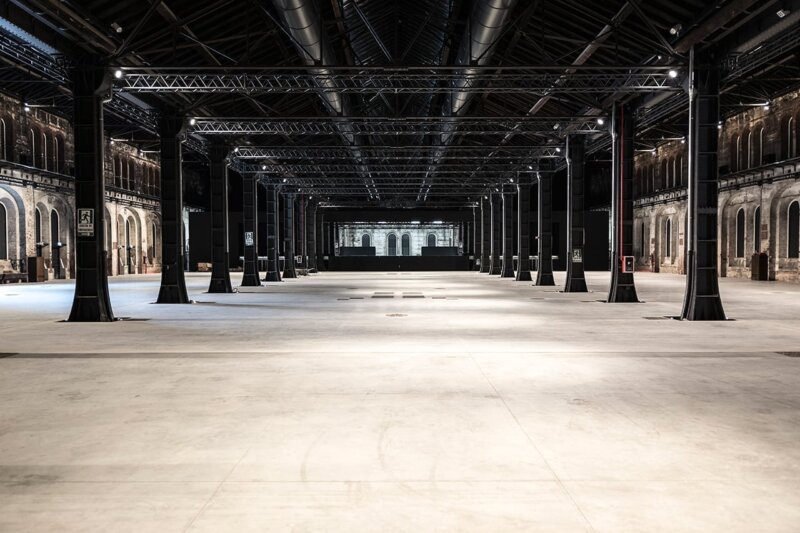
L'architettura industriale delle OGR Officine Grandi Riparazioni, oggi posizionata nel cuore di Torino - in corso Castelfidardo, a pochi metri da Porta Susa e a 50 minuti da Milano con l'alta velocità- ospiterà, in continua rotazione, mostre, spettacoli, concerti - dalla musica classica a quella elettronica - eventi di teatro, danza e arti performative, laboratori, start up, imprese innovative - dai Big Data al gaming - unendo le idee e i valori della creatività con gli strumenti e i linguaggi delle nuove tecnologie digitali.

The Royal Palace of Turin is the first and most important of the Savoy residences in Piedmont, theater of the Savoy kingdom for at least three centuries. Official residence of the Savoy until 1865, formerly Palazzo del Vescovo, it was transformed by Ascanio Vitozzi (1584) for Carlo Emanuele I and subsequently enlarged and renovated with an uninterrupted series of interventions in which the major architects and artists working in Turin took part in the 18th century and nineteenth century.

Inaugurated in 2002 on the top floor of the Lingotto complex, the pinacoteca collects a selection of works from the private collection of Gianni and Marella Agnelli. The collection is housed in the "casket", a steel body with a surface of 450 square meters raised to 34 meters from the test track on the roof of the plant. The structure is the work of the architect Renzo Piano. The architectural style represents a starship of crystals that symbolically recalls the futurist style of the original factory. In addition to the permanent collection, the museum periodically hosts temporary exhibitions of modern art.

Superga, Soperga in Piedmont, is one of the highest hills (672 m asl) of Torino, which rises east of the city center, on which the basilica of the same name is built .The Basilica is dedicated to the Madonna delle Grazie, whose wooden statue is kept in the Chapel of the Vow. You can also reach it with the Sassi-Superga cog railway, about 3 km long, using the original wagons of 1884.
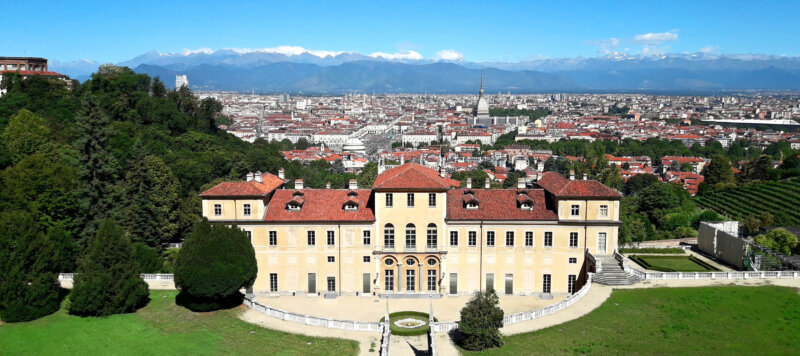
Villa della Regina, part of Turin muesums Complex, was commissioned by Cardinal Maurizio di Savoia, built according to a project by Ascanio Vitozzi at the beginning of the 17th century. It was restructured according to a project bVilla della Reginay Juvarra that in the first half of the eighteenth century paid particular attention to the villa in relation to the gardens. Reopened to the public after a careful restoration, it rediscovers the ancient splendor, scenographic backdrop of the city, in the center of the Italian gardens with pavilions, water games and agricultural areas that are once again productive. On the hills behind the villa, a famous vineyards produces red sapcial wine.

The rich exhibition Armeria Reale occupies three rooms connected to the hall of the Palazzo Reale halls: the Sala della Rotonda, so-called because the link between Palazzo Reale and Palazzo Madama, the magnificent Beaumont Gallery and the Medagliere, specially designed, were inserted here. from Pelagio Palagi to collect coins, medals and seals belonging to the Royal House.

664 Listings
.
.