
Museo d’arte Contemporanea


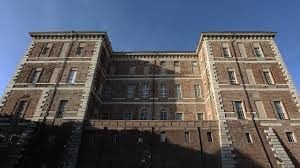
The property of the Bishops of Turin, the Castello became part of the Savoy dominion in 1247 and remained so until 1883, the year in which it was sold to the City of Rivoli. In 1350 it was selected as the setting for the marriage of Bianca of Savoy to Galeazzo Visconti. When Emanuele Filiberto chose Turin as the new capital of the Duchy, he settled in Rivoli with his court; his heir, Carlo Emanuele, was born at the Castello on January 12, 1559, under the care and guidance of Nostradamus, who had been invited to follow the pregnancy of the Duchess Margherita of Valois.
The new duke, Carlo Emanuele I, entrusted the Castellamonte architects Francesco Paciotto and Domenico Ponsello – father and son – to transform the medieval manor into a leisure residence, as illustrated on the two boards of the Theatrum Sabaudiae (Savoy Theatre), a celebration through images of the city, the fortresses, the residences and all the beauties of the Duchy. Here we see for the first time the Manica Lunga, a building designed to house the picture gallery of Carlo Emanuele I, joined to the castle by four tall towers, and the church dedicated to San Carlo Borromeo, which was never actually built.
The work was completed in 1670. By this time the Castello had already hosted important events, such as the birthday celebrations of Christine of France, the second Madama Reale, held on February 10, 1645. The only hall that has survived from that period, after the French troops of Marshall Catinat burned down and destroyed most of the building in 1690 and 1693, is the room of Amedeo VIII on the second floor.
Seeing the building burn from Turin, the young duke Vittorio Amedeo II promised himself that he would rebuild and make even more beautiful the residence that has always been so connected to the history of his family and which he greatly loved. In fact, it was from Rivoli that he announced his rise to the throne in 1730.
In August 1979, restoration work on the Castello alone began, and would last until 1984, when it opened its doors as the Museum of Contemporary Art. This work took into account its entire past, respecting its architecture, but with modern additions like the elevator, the suspended staircase, the platform on the late 1700s vault, and the panoramic area on the third floor.
From 1984 to 1986, Andrea Bruno began working on the Manica Lunga, but unfortunately a lack of funds closed down the site, which reopened only in 1996. It was in February 2000 that the building, first born to host Carlo Emanuele I’s picture gallery, refound its age-old splendor. The structure was maintained with the inclusion of the vault’s overturned hull-shaped steel cover and the steel and glass stairs joining the 17th-century structure. The large windows light up the rooms of the cafeteria, which has also become a treasure trove of works from the collection, and of other Museum services. Even the contemporaneity of the small parallel section that hosts the one-Michelin star restaurant Combal.Zero dialogues with the past, as do all elements of the Castello di Rivoli.