
.
Listings

The thread of the history of Toppino Camini is the pursuit of excellence, which we pursue daily with care and perseverance. Always against the current, Toppino anticipates the times to offer its customers tailored solutions, in compliance with the highest quality standards. In 1930 the family laboratory specializes in the construction of grained products.
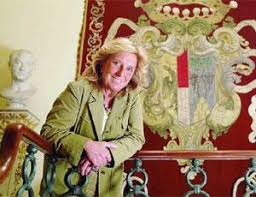
Sibilla della Gherardesca, sister of Gaddo and Manfredi, a strong, dynamic woman, with no hair on her tongue, proud and Tuscan. One of the Gherardesca in all respects. She raised Pitti images and is president of Fai. She loves to relax in his home, the Castle of Castagneto Carducci, a pleasant place resting just above the historic village. But she does not renounce to fight against the ugliness of which the territory boasts, because she serves respect and good taste, values now lost. Florentine by birth, since she was a child she is divided between the city of Medici and the Maremma that the whole family carries in her heart.

Durga natural colors and paints represent a historic line in the field of green building in Italy. In fact, since 1995 they are known in the field of restoration and sustainable construction. Durga products today make up a catalog of about 50 items, all biodegradable, including paints, thinners, paints and wall colors, detergents and household products.

At Il Grifo e la Fenice, run in Italy, this is what we love in the objects we deal with: their uniqueness, the care with which they were designed and made by the various Mastri who have taken care of every detail up to elevating them, in some cases, to real works of art. , gilding, bronzes, marbles, inlays, slabs, chisels, precious finishes, secrets sometimes difficult to reveal, often unimaginable levels to reach: many skilled hands have gone along shaping the material to make it vibrant and aesthetic in all its parts.

Piazzaarcobaleno.com is a showcase for handmade products, objects and craftsmanship. Our community is made up of small artisans, lovers of creativity and able to offer true quality.

Two individuals, Chiara Ferraris, and Giorgio Gros, two professionals join in Gioara to develop an ambitious and innovative project. Our mission is to combine noble materials, work them with specialized and innovative techniques, create custom and design products, make use of 100% Italian professionals, be competitive and follow the customer in every choice.

Nato dall'ingegno di Francesco Amodei e Sauro Martini dopo l'alluvione di Firenze del 1966, l’Istituto per l’Arte ed il Restauro Palazzo Spinelli viene fondato nel 1976. Situato nel cuore di Firenze, è oggi un centro di eccellenza internazionale per la formazione e la ricerca nel settore della conservazione. In cinquant'anni, migliaia di studenti da tutto il mondo si sono formati nei suoi laboratori, mentre l’apertura di scuole-laboratorio all’estero (da Praga a Istanbul) ha consolidato il prestigio di Firenze come capitale mondiale del restauro. Dal 1998, con la nascita dell’Associazione no-profit, l’Istituto si è evoluto in un network globale che conta oltre 450 partner e numerosi progetti europei attivi. Sotto la guida di Emanuele Amodei, l’istituto prosegue la sua missione con dedizione, coniugando i valori della tradizione con le moderne esigenze del mercato interno e internazionale, la valorizzazione del patrimonio culturale mondiale tramite innovazione e passione.
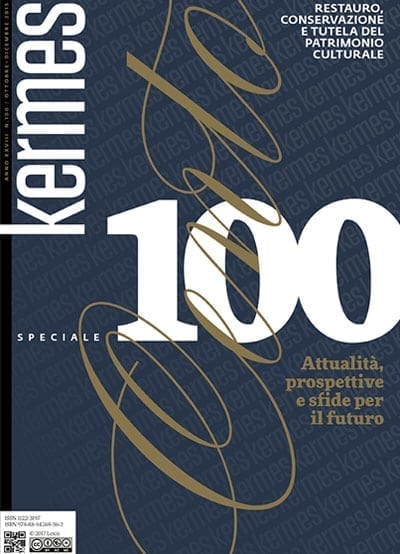
Kermes is a publishing project dedicated to the themes of restoration, conservation, and protection of cultural heritage. It is aimed at all interested scientific, professional and economic sectors: scientists and researchers, teachers and students of universities, academies and training institutes, restorers, artisans, entrepreneurs, but also public administrators, museum officials, gallery owners and other figures related to the market of works of art.

The Federighi 1926 spa has its roots in the textile and household linen sector since 1938. The entry into the company of the two sisters, Mariangela and Claudia Federighi, in the early 2000s, marks the beginning of the Blanc Mariclò project; Mariangela and Claudia finished university studies enter the family business and winning the initial resistance create a project in which they blend their stories, passions and intuitions, creating a line of shabby chic furniture of great personality and success.

The company Creaciones Fejomi S.L. was set up in 1980 by brothers Miguel and Fernando Prado Hervás, a family business that has become consolidated over the years.At the outset, the company was engaged in manufacturing English style furniture for sale on the Spanish market. The company Creaciones Fejomi S.L. was set up in 1980 by brothers Miguel and Fernando Prado Hervás, a family business that has become consolidated over the years.

Roberto Giovannini scopre la sua grande passione per la lavorazione del legno nel quartiere artigiano di San Frediano a Firenze: tecnica, manualità ed esperienza che iniziano a prendere forma nella prestigiosa Bottega d’Arte Bartolozzi e Maioli. Nel 1958 apre il suo laboratorio che in poco tempo diventa un riferimento sia per i clienti sia per chi desidera imparare l’arte. Nasce così la scuola per formare i giovani intagliatori per far progredire le nuove idee e preservare l’antica tradizione della lavorazione ad intaglio. Creazioni uniche in legno massello.

The National Automobile Museum was set up in 1932, on the left bank of the River Po, based on the idea of two pioneers of Italian motoring, Cesare Goria Gatti and Roberto Biscaretti di Ruffia, the first President of the Turin Automobile Club and one of the founders of Fiat. However, it was Carlo Biscaretti di Ruffia, Roberto’s son, after whom the National Automobile Museum was named in 1960, who conceived and put together the initial collection: the “steam vehicle”, designed by Virginio Bordino in 1854, the first Benz model, dated 1893, the first Peugeot model to circulate in Italy, the Pecori, which was the first three-wheeled car built in our country, just to mention a few of the most valuable exhibits. The MAUTO perfectly represents the excellence of the City of Turin, a place of conservation and memory, prestigious and unique in its kind. The National Automobile Museum boasts a collection of over 200 models of the highest quality and historical value, from various countries including Italy. We tell the story of the motor car, its transformation from a means of transport to an object of worship, from its origins right up to the contemporary evolution of creative thought.

In 1958 the Museum was opened to the public at Palazzo Chiablese, where part of the extraordinary collection of magic lanterns, objects and machinery of the Prolo collection was exhibited. In the Nineties he gained the choice to enhance the collections, creating a Foundation and above all giving the Museum a new location. The choice finally fell on the Mole and today, thanks also to its location in a building with such a strong visual and scenographic impact, the National Cinema Museum is an unmissable stop for anyone visiting Turin.
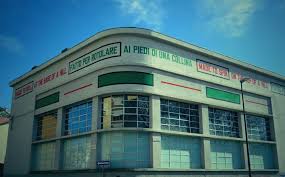
The Foundation, named after Mario Merz, was founded as a contemporary art center in 2005, with the aim of hosting exhibitions, events, educational activities and carrying out research and the study of art. The headquarters were originally the central of the Officine Lancia, a fascinating example of industrial architecture in Turin in the 1930s, which rises along the axis of the so-called "Spina centrale", a development urbanistic director on which numerous public art works have been carried out.

La Fondazione Sandretto Re Rebaudengo è un'istituzione senza scopo di lucro nata a Torino nel 1995 che sostiene l'arte contemporanea e in particolare la produzione dei giovani artisti. La Fondazione ha due sedi: Palazzo Re Rebaudengo a Guarene d’Alba, residenza settecentesca tra le colline del Roero, e il Centro torinese, un’architettura museale costruita ex novo in un quartiere che testimonia il passato industriale della città e le sue trasformazioni.

The Egyptian Museum of Turin, Museo Egizio Torino, is the oldest museum in the world, entirely dedicated to the Nilotic civilization and is considered, by value and quantity of the finds, the most important in the world after that of Cairo. Many internationally renowned scholars, beginning with the deciphering of Egyptian hieroglyphics, Jean-François Champollion, who arrived in Turin in 1824, have since devoted themselves to the study of his collections. When it was founded (1824), the Museo Egizio Torino was housed in the building called the Collegio dei Nobili, built to a design by Michelangelo Garove from 1679 on. It was used to exhibit the first antiquities in the Drovetti collection, purchased by King Carlo Felice. Following alterations by Giuseppe Maria Talucchi and Alessandro Mazzucchetti, the building was enlarged and adapted to its new use in the second half of the 19th century. Already in 1832, however, the Museum was opened to the public. Between 1903 and 1937, the archaeological excavations conducted in Egypt by Ernesto Schiaparelli and then by Giulio Farina brought some 30,000 artefacts to Turin. The Museum underwent a first reorganization of the rooms in 1908, and a second, more important one, in 1924, with the official visit by the king. Starting from the 1980s, partly as a result of increasing numbers of visitors, it became necessary to plan a new itinerary for visitors that led to the installation of new exhibition spaces. In particular, the reclamation and masonry underpinning of the Schiaparelli Wing created extensive underground spaces devoted to the archaeological activities at Assiut, Qau el-Kebir and Gebelein. On the ground floor, a large room was recovered to house antiquities from the Predynastic Period and Old Kingdom.

The Galleria Sabauda is an Italian art gallery located in Turin and is one of the most important collections of pictorial art in Italy. Hosted since 2014 in the Manica Nuova dl Palazzo Reale, within the complex of the Royal Museums of Turin, it has over 700 paintings ranging from the thirteenth to the twentieth century. The history of the art gallery dates back to 1497 when the Savoy gathered together the ancient works acquired by the family into an inventory. The first real catalog dates back to 1631 and is carefully preserved in a special case.

La Galleria Civica d'Arte Moderna e Contemporanea di Torino si trova in via Magenta 31 a Torino, in Italia. Fu fondata attorno al 1891-95. Ospita le collezioni artistiche permanenti dell'Ottocento e del Novecento. Uno sguardo all’arte moderna italiana e alle tendenze internazionali dell’arte contemporanea compresa una tra le più importanti raccolte di video d’artista.

Il Planetario di Torino, Museo dell'Astronomia e dello Spazio ha sede a Pino Torinese, sulla collina di Torino. Sorge accanto all'Osservatorio astronomico, antica istituzione scientifica torinese. Museo e planetario per viaggiare nell'universo e scoprire l'evoluzione dell'astronomia, dalle prime scoperte alle imprese spaziali.
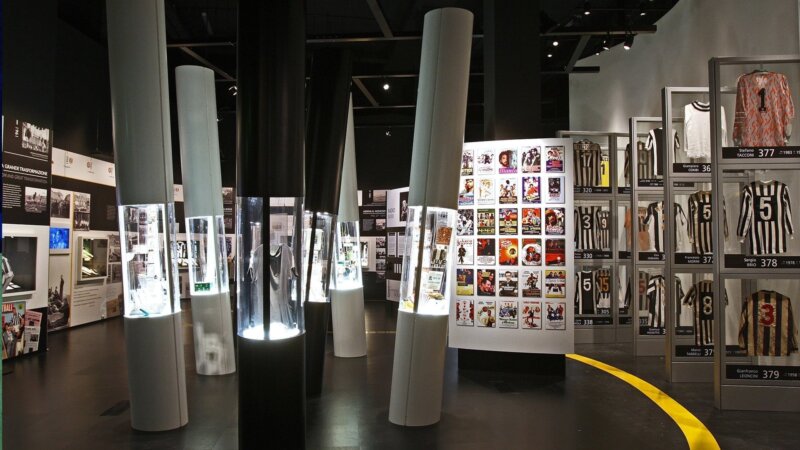
Il J-Museum, noto per esteso come Juventus Museum, è un museo storico-sportivo multimediale bilingue dedicato alla società calcistica italiana per azioni Juventus Football Club, con sede nell'area nord-occidentale della città di Torino. E' un museo all’avanguardia e tecnologico che si rivolge sia ai tifosi bianconeri, che possono riassaporare le gioie che la tradizione vincente della Juventus ha offerto loro, sia a un pubblico più ampio, che attraverso la storia della società potrà rivivere quella del Paese.

664 Listings
.
.