.

I was born in Nelspruit, Mpumalanga, but raised in Jozini, Kwa-Zulu Natal and a Diver at heart. School Holidays was spent on the beach and in the ocean at Sodwana Bay. My Passion for acting started at a young age when I was approached by my arts teacher to play the lead as “Joseph” in that year’s school play, “Joseph and his technicolor dream coat”. In 2006, I moved to Saldanha bay Naval Base to conduct my basic training and upon completion, reported to Simon’s Town Naval Base Diving Centre. I worked at the Naval Diving Centre until mid- 2007, but reported for duty aboard SAS Spioenkop (Naval Warship) later that year and for the rest of my stay in the SA Navy. I resigned from the SA Navy at the end of 2009 to further pursue my childhood passion for Acting, after it had been re-ignited back in 2007, when a Production Company came to shoot the one part series, “Diver’s Down”, at the Naval Diving Base where I was stationed. Since then, I performed numerous small roles in Films and TV Shows with goals and aspirations to become a successful actor in the industry. Years later and struggling in the industry I started a Photography business in 2017 shooting headshots for actors in the industry and also specializing in Real Estate Photography. I also worked in the hospitality industry during this time working my way up to head of staff at a fine dining Italian Restaurant in the Bellville area of Cape Town. December 2018 I made the very hard decision to hang up my Actor’s hat and retire from the industry as I needed to make a change. So with a fire in my belly and a pursuit of a new career I embarked on an old passion within the boating world. I completed my Yacht Master Coastal and SAS Day Skipper certificate followed by a plane ticket to Nice, France. I spent a month walking countless amount of steps that would make “Discovery Vitality” proud on the docks of the various harbors handing out my cv in an attempt to book work as crew on board. With a few days worth of day work under the belt and finally booking an interview for a possible crew position, my visa expired and I needed to come home. Luckily I was being strongly considered for a position aboard but I needed to wait for the boat to come out of the drydock. With this I flew back to SA with a hopeful heart knowing that I would soon return to France. As things go, the opportunity was cancelled (Owner preferred a merger of the two available roles and he preferred a female). What to do now? Unemployed and with depleted finances of not being able to return I started looking for work and was unemployed until Sept the same year when I finally got an opportunity to begin work as a Junior Site Supervisor for a Construction Business (not ideal, but hey challenge accepted and gotta pay dem bills son!). I have since then worked for the same company, building weigh bridges, expanding warehouses, pouring concrete floors and laying paving. I have learned so much and have grown allot since then. Recently I approached and dusted off my photography equipment again and am in the process of starting this up as well. Being in the construction industry has sparked allot of ideas and have given me a new passion for real estate, especially as an Investor. People tend to describe me as ambitious, hardworking, punctual and goal-oriented. I have high attention to detail and work really well in both a team environment and on my own. I am pro-active, a problem solver and creative at heart. I won’t stop until the project or task is completed. More personally I enjoy the outdoors, love being fit and healthy and spending my off time with my most valuable assets; family and friends. Short term goals: – To learn and grow the new skills required to perform given tasks efficiently and with excellence. -To prove myself a valuable asset, as a hardworking, dependable and trustworthy individual to my fellow colleagues, managers and seniors. Long term goals: -To become one of the best in my department and be seen as the go to guy for a specific job or task. -To become manager and coach to younger generations looking to enter my industry. -To eventually run a team of managers, teaching them to effectively run their teams with excellence. I believe in serving others with excellence. The effort you put in will reap the results you desire. I also believe that being truthful, respectful and trustworthy are very important keys to success and I strive to live by these principles daily.

Chiara Cataldi, decoratrice pittorica, arreda le pareti col suo pennello con poesia e maestria. Chiara ha affinato la sua professionalità e creatività attraverso la passione e l'amore per il suo lavoro. Ogni muro o parete è un foglio bianco sul quale Chiara crea il mondo che il committente desidera ritrovarsi intorno. Fiori, animali, disegni geometrici, disegni astratti, le boscherecce che sono la sua passione. I colori sono delicati e armoniosi e sempre adatti al luogo e allìambiente. Anche i bagni e gli interni doccia possono essere oggetto del suo intervento con materiali naturali e impermeabili. La sua amata Genova con i suoi colori ha certamente ispirato la sua arte. Chiara Cataldi, wall interior decorator, furnishes walls with her brush with poetry and skill. Chiara has honed her professionalism and creativity through her passion and love for her work. Each wall is a blank sheet on which Chiara creates the world that the client wishes to find around him. Flowers, animals, geometric designs, abstract designs, the woods that are her passion. The colors are delicate and harmonious and always suitable for the place and the environment. Even the bathrooms and shower interiors can be the subject of her intervention with natural and waterproof materials. Her beloved Genoa with her colors has certainly inspired her art.

The Heritage Portal is a news and information platform for the South African Heritage Sector. It is a volunteer driven initiative that relies on content contributions from members of the heritage community. The Heritage Portal is South Africa's leading history and heritage website. Their goal is to get South Africans excited about the past. They publish fascinating articles and book reviews and share notices about what is happening throughout the heritage community. They host The Heritage Directory, a list of individuals, organisations and companies providing products and services to South Africa’s heritage sector. They are also building a database of South Africa's blue plaques.

I am passionate about my work. Because I love what I do, I have a steady source of motivation that drives me to do my best. In my last job, this passion led me to challenge myself daily and learn new skills that helped me to do better work. I am ambitious and driven. I thrive on challenges and constantly set goals for myself, so I have something to strive toward. I’m not comfortable settling, and I’m always looking for an opportunity to do better and achieve greatness. I am an excellent communicator. I pride myself on making sure people have the right information because it drives better results. Most business issues stem from poor communication, so I feel a responsibility to keep everyone on the same page. I am results-oriented, constantly checking in with the goal to determine how close or how far away we are and what it will take to make it happen. I find this pressure inspiring and a great motivator for the rest of the team. I am highly organized. I always take notes, and I use a series of tools to help myself stay on top of deadlines. I like to keep a clean workspace and create a logical filing method so I’m always able to find what I need. I find this increases efficiency and helps the rest of the team stay on track, too. I’m a people-person. I love meeting new people and learning about their lives and their backgrounds. I can almost always find common ground with strangers, and I like making people feel comfortable in my presence.

Da oltre 15 anni ci occupiamo di comunicazione integrata: facciamo buona comunicazione capace di rappresentare un reale valore aggiunto per aziende, brand, enti e prodotti. Offriamo nuove visioni e prospettive alternative, produciamo idee che prendono vita sui media, creiamo azioni e strategie in grado di colpire il target, di aumentare la visibilità e la soddisfazione dei nostri clienti. Siamo come comunichiamo: senza filtro, senza giri di parole e senza frasi fatte, pronti a rispondere ad esigenze specifiche mettendo sempre d’accordo creatività e mission.Stampa e affissione, spot radio e video, supporti multimediali e siti web: le competenze interne ed il network di professionisti che collaborano con Senza Filtro permettono la realizzazione di azioni comunicative articolate per ogni tipo di esigenza. La nostra Agenzia supporta i suoi clienti anche con specifiche attività di ufficio stampa, gestione social media strategy e consulenza strategica per creare visibilità. Le azioni e il piano di comunicazione sono studiati a partire dalle caratteristiche specifiche di ogni realtà con l’obiettivo di creare materiali stampa ad hoc per valorizzare i contenuti dell’evento sui diversi media sia web che tradizionali. L’agenzia è in grado di offrire inoltre attività di PR e promozione finalizzate a individuare ed a coinvolgere i target di interesse strategico.

Domenico Dolce was born in Polizzi Generosa (near Palermo, Sicily) on 13 September 1958. His family owned a small clothing business, where Domenico worked from childhood. Stefano Gabbana was born in Milan on 14 November 1962. He studied graphics but soon turned to fashion. After a brief period working as assistant designers, they founded the Dolce & Gabbana label, which had its first runway show as part of the New Talent group in Milan in 1985, upon the invitation of Italian fashion promoter Beppe Modenese. Dolce and Gabbana's First Collection In 1986 they produced their first collection, called "Real Women." In 1987 they launched their knitwear line and in 1989 their beachwear and lingerie lines. Beginning in 1988 they produced their ready-to-wear line in Domenico Dolce's family-owned atelier, located in Legnano, Milan. The first Dolce & Gabbana men's collection appeared in 1990. In 1994 they launched the D&G label, inspired by street style and a more youthful look. The clothes were produced and distributed by Ittierre. Slowly, the pair launched other product lines, including knitwear and accessories, and gained notoriety particularly for their sensual dresses and menswear, which won them the 1991 Woolmark Prize. In the early 1990s, pop star Madonna selected them as her costume designers for her “Girlie” world tour and wore one of their jewel-encrusted corsets to the Cannes Film Festival. Throughout the ‘90s, the duo were famed for their overtly feminine, colourful garments, which stood in stark contrast to the wave of minimalism that was sweeping across fashion at the time. For several seasons’ campaigns and runway shows, the pair have cast ordinary men and women, typically from their native Italy. They have designed for everyone from AC Milan to Motorola and have also co-authored a dozen or so books detailing their collections and legacy. In June 2013, Dolce and Gabbana were charged and convicted of tax evasion, however the duo successfully appealed to overturn their conviction and were pronounced innocent by the Italian Supreme Court of Justice in October 2014. “We have always been honest, and we are extremely proud of this recognition by the Italian Court of Justice. Viva l’Italia,” said the pair in a statement at the time. In late 2018, the duo came under media fire for when the brand posted a marketing campaign featuring an Italian model eating Italian food with chopsticks, that was deemed derogatory to Chinese culture. Following the outrage, Gabbana was ousted online for a racist feud between him and another Instagram user. With Chinese consumers making up a sizeable chunk of the luxury market, the brand lost a large part of its Asian-Pacific market due to boycotts. By November, the brand cancelled its Shanghai fashion show. the first quarter of 2019, social media engagement for the brand fell by 98 percent compared to the same time last year. In 2019, the brand also announced it would extend its style sizes to 14-18, as of its pre-fall 2019 collection. Following its international faux pas that same year, the brand staged it’s Alta Moda fashion show in the Temple of Concordia, a UNESCO World Heritage site turned into its own ancient Greece-inspired runway. Although their personal relationship ended in 2005, as The New Yorker puts it, “Gabbana is the eyes for Dolce’s hands,” and they have continued to work together on an enduring empire, crafted from scratch, by their love of their homeland and the scope of their romantic imagination.

Le orecchiette sono una pasta tipica della Puglia, regione del sud Italia. Il loro nome deriva dalla loro forma, che ricorda un piccolo orecchio. L'orecchietta ha la forma di una cupoletta, con il centro più sottile del bordo e con la superficie ruvida. Come altri tipi di pasta, le orecchiette sono fatte con semola di grano duro e acqua. Le uova sono usate raramente. Nella cucina casalinga tradizionale del sud Italia, la pasta viene arrotolata, quindi tagliata a cubetti. Ogni cubo viene pressato con un coltello, trascinandolo sul tagliere e facendolo arricciare (facendo un cavatello). La forma viene quindi invertita sopra il pollice. Le orecchiette si mangiano con broccoli, cime di rapa, cozze e funghi. Ogni famiglia pugliese ha la sua ricetta che si tramanda di madre in figlia. Secondo illustri studiosi dell'enogastronomia pugliese le orecchiette avrebbero avuto origine nel territorio di Sannicandro di Bari, durante la dominazione normanno-sveva, tra il XII e il XIII secolo. Nel cuore del centro storico di Bari c'è una via ribattezzata “la via delle orecchiette” o “via delle orecchiette”. La via in questione si chiama ufficialmente Strada Arco Basso, caratterizzata appunto da un piccolo tunnel che un tempo attraversato conduce alla più antica tradizione di Bari Vecchia, quella della produzione delle fantastiche e popolarissime orecchiette baresi. Le donne preparano le orecchiette chiacchierando e aiutandosi. Hanno un sapere antico che si tramandano di madre in figlia, di nonna in nipote. Ciascuna famiglia conserva i propri piccoli segreti per la lavorazione delle orecchiette che avviene davanti alla gente e sono una vera attrazione del centro storico di Bari, oltre a rappresentare uno spaccato originale della quotidianità pugliese. La buonissima pasta fresca (poi lasciata asciugare su banchi di legno) può essere acquistata anche dalle stesse signore; queste donne, infatti, per permettere ai turisti di portare a casa il gusto tipico delle orecchiette baresi, mettono la pasta fresca in semplici sacchetti di plastica così da permettere alle persone di tornare a casa con un gustoso “ricordo” pugliese. Orecchiette are a pasta typical of Apulia, a region of Southern Italy. Their name comes from their shape, which resembles a small ear. An orecchietta has the shape of a small dome, with its center thinner than its edge, and with a rough surface. Like other kinds of pasta, orecchiette are made with durum wheat and water. Eggs are rarely used. In traditional Southern Italian home cooking, the dough is rolled, then cut into cubes. Each cube is pressed with a knife, dragging it on the board and making it curl (making a cavatello). The shape is then inverted over the thumb. Orecchiette are eaten with broccoli, turnip tops, mussels and mushrooms. Each Apulian family has its own recipe that is handed down from mother to daughter. According to distinguished scholars of Apulian food and wine orecchiette would have originated in the territory of Sannicandro di Bari, during the Norman-Swabian domination, between the 12th and 13th centuries. In the heart of old town of Bari there is a street renamed “the street of orecchiette” or “street of orecchiette”. The street in question is officially called Strada Arco Basso, characterized precisely by a small tunnel that once crossed leads to the oldest tradition of Bari Vecchia, that of the production of the fantastic and very popular orecchiette from Bari. The women prepare the orecchiette by chatting and helping each other. They have an ancient knowledge that is handed down from mother to daughter, from grandmother to granddaughter. Each family keeps their own little secrets for the processing of orecchiette that takes place in front of the people and are a real attraction of the historic center of Bari, as well as representing an original cross-section of Apulian everyday life. The delicious fresh pasta (then left to dry on wooden counters) can also be purchased by the ladies themselves; these women, in fact, to allow tourists to take home the typical taste of orecchiette from Bari, put the fresh pasta in simple plastic bags so as to allow people to go home with a tasty Apulian "memory". The delicious fresh pasta (then left to dry on wooden counters) can also be purchased from the ladies themselves; these women, in fact, to allow tourists to take home the typical taste of orecchiette from Bari, put the fresh pasta in simple plastic bags so as to allow people to go home with a tasty Apulian “souvenir”.

I Bronzi furono ritrovati nel 1972, in eccezionale stato di conservazione, sul fondo del mar Ionio, nei pressi del comune di Riace Marina, da un appassionato subacqueo durante un'immersione a circa 200 m dalla costa ed alla profondità di 8 m. Presso la località Porto Forticchio di Riace Marina, furono ritrovate due statue in bronzo, apparentemente senza nessun reperto coevo nei dintorni. Il loro recupero fu eseguito con una imbarazzante leggerezza e con mezzi non appropriati, al punto che venne “dimenticato” sulla spiaggia un grosso pezzo di ceramica tardo antico, posto tra l’avambraccio destro e il torace del Bronzo A per impedire che il braccio stesso potesse danneggiarsi durante il trasporto.Dopo il recupero, le statue vennero avviate a un primo restauro, che fu realizzato a tra il 1975 e il 1980 a Firenze. Due furono gli obiettivi dell’intervento: pulizia e conservazione delle superfici esterne; tentativo di svuotamento della terra di fusione posta all’interno delle statue. La rimozione della terra di fusione fu portata avanti nel laboratorio di restauro posto nel Museo di Reggio negli anni 1992-1995, e finalmente conclusa nell’ultimo restauro tra gli anni 2010 e 2013, effettuato presso la sede del Consiglio Regionale della Calabria, a Palazzo Campanella.Le due statue, denominate “A” e “B”, e ribattezzate a Reggio come “il giovane” e “il vecchio”, sono alte rispettivamente 1,98 e 1,97 m, e il loro peso, originariamente di 400 kg, ora è diminuito a circa 160 kg, in virtù della rimozione della terra di fusione. La località di ritrovamento, posta presso un porto mai studiato scientificamente, ma che sembra essere attivo già dall’epoca greca, è altamente significativa. La sua funzione di porto è resa certa dalla presenza della Torre di Casamona, di epoca angioina, anche se datata erroneamente al XVI sec., la cui funzione era quella di proteggere l’approdo e fungere da luogo di esazione delle tasse. Il ritrovamento delle due statue nei pressi del porto avvalora le teorie che mettono in relazione la presenza a Riace dei due Bronzi con il loro trasporto da o verso Roma. Altri particolari, come la presenza della ceramica per proteggere l’integrità della Statua A, sembrano attestare che le due opere erano in viaggio per essere esposte in un altro luogo. Le due statue sono di bronzo, dallo spessore molto tenue, tranne alcuni particolari in argento, in calcite e in rame. Sono in argento i denti della Statua A. In rame sono stati realizzati i capezzoli, le labbra e le ciglia di entrambe le statue, oltre che le tracce di una cuffia sulla testa del Bronzo B. In calcite bianca è la sclera degli occhi, le cui iridi erano in pasta di vetro, mentre la caruncola lacrimale è di una pietra di colore rosa. Le due statue sono state certamente eseguite ad Argo, nel Peloponneso e raffigurano due opliti, anzi un oplita (Bronzo A) e un re guerriero (Bronzo B). Oggi i due bronzi si trovano al Museo Archeologico di Reggio Calabria, in ambiente protetto e meritano assolutamente una visita. The Bronzes were found in 1972, in an exceptional state of conservation, on the bottom of the Ionian Sea, near the town of Riace Marina, by a passionate diver during a dive about 200 m from the coast and at a depth of 8 m. In the locality of Porto Forticchio di Riace Marina, two bronze statues were found, apparently without any contemporary finds in the surroundings. Their recovery was carried out with an embarrassing lightness and with inappropriate means, to the point that a large piece of late antique ceramic was "forgotten" on the beach, placed between the right forearm and the chest of Bronze A to prevent the arm itself could be damaged during transport. After the recovery, the statues were sent for a first restoration, which was carried out between 1975 and 1980 in Florence. There were two objectives of the intervention: cleaning and conservation of the external surfaces; attempt to empty the fusion earth placed inside the statues. The removal of the fusion earth was carried out in the restoration laboratory located in the Reggio Museum in the years 1992-1995, and finally concluded in the last restoration between the years 2010 and 2013, carried out at the headquarters of the Regional Council of Calabria, in Palazzo Bell. The two statues, called "A" and "B", and renamed in Reggio as "the young" and "the old", are respectively 1.98 and 1.97 m high, and their weight, originally 400 kg, now it has decreased to about 160 kg, by virtue of the removal of the melt. The place of discovery, located near a port that has never been scientifically studied, but which seems to have been active since the Greek era, is highly significant. Its function as a port is confirmed by the presence of the Casamona Tower, dating back to the Angevin era, even if erroneously dated to the 16th century, whose function was to protect the landing place and act as a place for tax collection. The discovery of the two statues near the port confirms the theories that relate the presence of the two Bronzes in Riace with their transport to or from Rome. Other details, such as the presence of ceramics to protect the integrity of Statue A, seem to attest that the two works were on their way to be exhibited in another place. The two statues are of very thin bronze, except for some details in silver, calcite and copper. The teeth of Statue A are in silver. The nipples, lips and eyelashes of both statues were made in copper, as well as the traces of a cap on the head of Bronze B. In white calcite is the sclera of the eyes, the whose irises were in glass paste, while the lacrimal caruncle is of a pink colored stone. The two statues were certainly made in Argos, in the Peloponnese and depict two hoplites, indeed a hoplite (Bronze A) and a warrior king (Bronze B). Today the two bronzes are in the Archaeological Museum of Reggio Calabria, in a protected environment and are absolutely worth a visit.

The Museum of the Earth was designed by New York City architects Marion Weiss and Michael Manfredi. Planning for the Museum of the Earth began in 1994. Construction began in September 2001 and the Museum opened to the public in September 2003. The building received an Excellence in Design Award from the New York State Chapter of the American Institute of Architects in 2004. Learn directly from PRI’s science educators about the history of the Earth and its life. We offer numerous activities free with admission, such as tours, family-friendly activities during special events and holidays, and fossil identification. We offer related offsite programs, including interpretive walks in the State Parks and fossil collecting, in the summer months. Check out What’s Happening on the Museum of the Earth homepage to learn about upcoming events. Groups of ten of more who make reservations receive a reduced group admission rate. You may also wish reserve a hands-on presentation or a group tour. We serve groups of all ages and backgrounds, such as school groups, Scouts, college classes, tour groups, and many others. The Paleontological Research Institution is a national leader in Earth systems science education programming. We offer a diversity of programs and resources on Earth and environmental sciences, including climate change and energy, paleontology and Earth science, evolution and biodiversity, and conservation of natural environments.

A principios de la década de los setenta Alicia Pietri de Caldera, concibió la idea de crear un museo para los niños y jóvenes venezolanos que no se pareciera a los museos tradicionales. En el periodo 1969-1974 Doña Alicia, en su condición de Primera Dama de la República y Presidenta de la entonces Fundación Festival del Niño, puso en práctica el Programa Arte y Cultura para los Niños, con la intención de desarrollar sus capacidades mediante actividades participativas. El programa evidenció la necesidad de vincular al niño con el arte, la ciencia y la tecnología para despertar aptitudes y dar respuesta creadora a las inquietudes e interrogantes del hombre del futuro. Esta necesidad se transformó en el objetivo de la Fundación Privada Museo de los Niños. Finalmente, el museo fue inaugurado en 1982 en la ciudad de Caracas. El Museo de los Niños de Caracas es único. Un gran laboratorio para experimentar y explorar, en el cual las máximas fundamentales son “Prohibido no Tocar” y “Aprender Jugando”. Un sitio donde se permite: tocar, resolver, explorar, inventar, relacionar, crear, participar y responder. Una nueva alternativa para educar a través de la recreación, estimular el aprendizaje a través del descubrimiento, enseñarle al niño un camino al conocimiento que parte de las cosas simples que lo rodean y lo llevan a otras más complejas. Las áreas básicas del Museo son: Biología, Comunicación, Ecología y Física. Con el pasar de los años se han actualizado muchas de las exhibiciones, para presentarlas de manera más novedosa a los visitantes, tales como las que muestran Los Sentidos, el Corazón y la Alimentación, en el Área de Biología. En el área de Física, la exhibición de Electricidad se transformó completamente para mostrar cómo se produce, se transmite, se distribuye y se consume. En el área de Ecología, se actualizaron las exposiciones acerca de los Parques Nacionales, las Cadenas Alimentarias, Reconoce tus árboles, y la Huerta, así como el estudio de TV y la pared de símbolos en el Área de Comunicación. Además, se han construido nuevas exhibiciones tales como Terremotos y Volcanes, el motor abierto de un vehículo, ADN, la magia de los genes, los Sistemas del Cuerpo, Cuida tu cuerpo y evita la diabetes, la Capa de Ozono y el Calentamiento Global, Ensayo y error, los comienzos de la aeronáutica, NANO, una miniatura inimaginable, el Astronauta, el Satélite Simón Bolívar, la Carrera Espacial, Jugando a ser Amigo Guía y El Rincón de los Cuentos.

ITALY Magazine is produced by an international community of people who love Italy and Italian culture. We are dedicated to delivering content that celebrates beauty and authenticity in Italian travel, lifestyle, language and food to help our readers stay connected to ITALY in a meaningful way. Since 1999, ITALY Magazine has been the world’s most trusted source for everything authentically Italian. Fall in love with ITALY through our feature articles, catch up with the latest news, purchase authentic Italian products, learn the language, find your own Italian property, make your travel bookings, and join our forums to share your passion for ITALY with others. Mike FullerAs the new Publisher of Italy Magazine, Mike Fuller is re-visiting his publishing roots from 25 years ago. Mike was the former publisher of Student Travels Magazine between 1995-1999 and during that same period developed a number of custom publishing projects for the British Tourist Authority including Britain on a Budget as well as special supplements aimed at the 50+; the gay and lesbian; and, the honeymoon markets. A native of Montreal, Mike currently resides in Boston but travels extensively to Italy where he spends most of his time in his favorite city, Rome. Mike has been visiting Italy for over 35 years and traveled from north to south several times but his biggest regret so far is that he has yet to make it to Sicily.

The Perth Town Hall, situated on the corner of Hay and Barrack streets in Perth, Western Australia, is the only town hall built by convicts in Australia. Upon completion, it was the tallest structure in Perth. Designed by Richard Roach Jewell and James Manning in the Victorian Free Gothic style, the hall was built by convicts and free men between 1867 and 1870. Its decorations contain a number of convict motifs, including windows in the shape of the broad arrow, and decorations in the shape of a hangman's rope. The foundation stone for Perth Town Hall was laid on 24 May 1867 by Governor Hampton in a ceremony involving a lot of pomp and parade. However, there were torrential downpours. The ceremony went on anyway with an official procession from Government House and a mock battle performed by the Volunteer Regiments, Enrolled Forces of Pensioners, and the WA Country Regiment. In the 1929 centenary of Western Australia, one of the events in the city of Perth was the placing of a commemorative plaque in the northwest corner of the building by the Governor Sir William Campion. For many decades in the 20th century, shops were built into the sides of the ground floor, and the public lavatories accessible from Barrack Street were the only ones available for some distance. The shops included a pharmacy, bank, lunch bar and other shops. All these businesses and the attendant structures were removed prior to the renovation of the hall. At the time of its centenary in 1970, the ground floor was still full of commercial businesses. The Town Hall was restored in the late 1990s at the base in an award-winning restoration to repair the interior of the hall and the gothic arches at its base, which were "modernised" in the middle of the 20th century.

Fusing ancient and modernist influences, and built on a site sacred to the local Gadigal people for thousands of years, the sculptural elegance of the Sydney Opera House has made it one of the most recognisable buildings of the twentieth century, synonymous with inspiration and imagination. As Pritzker Prize judge Frank Gehry said when awarding architecture’s highest award to the Opera House’s architect in 2003: “[Jørn] Utzon made a building well ahead of its time, far ahead of available technology... a building that changed the image of an entire country.” Built to “help mould a better and more enlightened community,” in the words of New South Wales Premier Joseph Cahill in 1954, the Sydney Opera House has been home to many of the world’s greatest artists and performances, and a meeting place for matters of local and international significance since opening in 1973. Today it is Australia’s number one tourist destination, welcoming more than 8.2 million visitors a year and one of the world’s busiest performing arts centres, presenting more than 2000 shows 363 days a year for more than 1.5 million people, from the work of the seven flagship arts companies to which it is home to First Nations’ arts and culture, talks and ideas, theatre and dance and the superstars of classical and contemporary music. The breadth of those experiences reflects our visionary 1961 Act, which charges the Opera House not only with the promotion of artistic taste across all art forms, but also “scientific research into, and the encouragement of, new and improved forms of entertainment and methods of presentation.” But while the tale of the Opera House is one of breathtaking triumph, it is also one of personal cost. The building’s design was inspired - entirely unlike anything that had been seen before. Pressures piled upon its architect, Jørn Utzon, who left Australia midway through construction, never to return to see the building completed. Nevertheless, Utzon’s masterpiece would define his career, and redefine the image of Australia both to itself and the world. An exercise in nation building, as Joe Cahill underlined, it was an extraordinary collective act of dreaming in public; a work of art built for the performance of works of art and brought to life by people who believed in the power of imagination. Realising the dream took us all - visionaries and pragmatists, politicians and architects, engineers, artists and, most fundamentally, the people of Australia.

The Art Gallery of New South Wales acknowledges the traditional custodians of the country on which it is located, the Gadigal of the Eora nation, and recognises their continuing connection to land, waters and culture. From its magnificent site in Sydney, the Art Gallery of NSW is one of Australia’s flagship art museums and the state’s leading visual arts institution. Our mission is to serve the widest possible audience as a centre of excellence for the collection, preservation, documentation, interpretation and display of Australian and international art, and a forum of scholarship, art education and the exchange of ideas. The Art Gallery of New South Wales began without a collection and without a building on 24 April 1871 when a group of 30 art-loving citizens established a society to support artists and promote knowledge and enjoyment of art in the wider community. In 1874 they secured government support for their project and by 1880 they had their own dedicated building, the first of its kind in Australia. 150 years on from that foundation, after changes in name and location, the Art Gallery continues to play a vital role in the cultural life of the state and the nation. It is a cherished public art museum, not only by the artists and visitors who are at the core of its existence, but by all who have been enriched by the Gallery’s art collections, exhibitions and programs. Celebrating our 150th anniversary in 2021, as we undertake a significant expansion, the Art Gallery remains committed to making art a vital part of everyday life. Our transformation – the Sydney Modern Project – will create a new art museum experience across two buildings connected by a public art garden in one of the world’s most beautiful cultural precincts. The Art Gallery’s new building, designed by Pritzker Prize-winning architects, SANAA, brings together art, architecture and landscape in spectacular new ways with dynamic galleries and seamless connections between indoor and outdoor spaces. It will be a new prominent destination for Aboriginal and Torres Strait Islander art and culture. The expansion is scheduled for completion in 2022.

The National Gallery of Victoria, popularly known as the NGV, is an art museum in Melbourne, Victoria, Australia. Founded in 1861, it is Australia's oldest and most visited art museum. The NGV International building, designed by Sir Roy Grounds, opened in 1968, and was redeveloped by Mario Bellini before reopening in 2003. It houses the gallery's international art collection and is on the Victorian Heritage Register. The Ian Potter Centre: NGV Australia, designed by Lab Architecture Studio, opened in 2002 and houses the gallery's Australian art collection. The NGV's Australian art collection encompasses Indigenous (Australian Aboriginal) art and artefacts, Australian colonial art, Australian Impressionist art, 20th century, modern and contemporary art. The first curator of Australian Art was Brian Finemore, from 1960 until his death in 1975. The NGV's Asian art collection began in 1862, one year after the gallery's founding, when Frederick Dalgety donated two Chinese plates. The Asian collection has since grown to include significant works from across the continent.

The Old Melbourne Gaol is a former jail and current museum on Russell Street, in Melbourne, Victoria, Australia. It consists of a bluestone building and courtyard, and is located next to the old City Police Watch House and City Courts buildings, and opposite the Russell Street Police Headquarters. It was first constructed starting in 1839, and during its operation as a prison between 1845 and 1924, it held and executed some of Australia's most notorious criminals, including bushranger Ned Kelly and serial killer Frederick Bailey Deeming. In total, 133 people were executed by hanging. Though it was used briefly during World War II, it formally ceased operating as a prison in 1924; with parts of the jail being incorporated into the RMIT University, and the rest becoming a museum. The three-storey museum displays information and memorabilia of the prisoners and staff, including death masks of the executed criminals. At one time the museum displayed what was believed at the time to be Ned Kelly's skull, before it was stolen in 1978; as well as the pencil used by wrongly convicted Colin Campbell Ross to protest his innocence in writing, before being executed. When the Old Melbourne Gaol was built in the mid-1800s, it dominated the Melbourne skyline as a symbol of authority. Inside the Gaol, dangerous criminals were held alongside petty offenders, the homeless and the mentally ill. Old Melbourne Gaol enables visitors to immerse themselves in the stories of past inmates, explore the City Watch House or learn about justice in the Old Magistrates’ Court.

Carola Zambaldi è una viaggiatrice del mondo, appassionata da sempre di scoprire nuove culture e paesaggi naturali diversi. Ha sviluppato una tecnica con resine colorate molto resistenti con le quali crea oggetti vari in maniera del tutto scontata, mentre scontata non è. I colori sono brillanti e trasmettono la sua vivacità ed energia positiva.

I am 56 years old and love life ! and am engaged to a wonderful man and we have been together for 9 years. I have 1 son who lives in Houston, Texas with his lovely wife and my 2 beautiful grandchildren. I have 1 sister who is sadly disabled. She has Motor Neuron Disease and is paralysed from the neck down. She has had this debilitating illness since 1998. I care very deeply for her and continue to walk this hard, painful journey with her. I would love to one day open up a strung of Care Homes called Mandy in honour of her. Watching your disabled sister struggle every day has been heart breaking but through this I have learnt the art of caring, giving and kindness. To be able to help and be there for those less fortunate than you is a heartwarming experience and exceptionally rewarding. My passion is travelling – I absolutely LOVE IT ! My sport is Golf and because I have such an adventurous, extrovert personality I also love a lot of other things like Boating, Fishing, Cooking, Drinking wine and socialising. The list is so long because I am always willing to try new things and experience new places. I am an extrovert in personality and love bringing out the best in people. My profession at the moment is a Key accounts Manager for a Surgical Equipment company. I have been with them for 14 years. I have vast experience in Sales and Customer service and represent my company by calling on all Hospitals – Private and Provincial throughout the entire Eastern Cape. I work with doctor’s in theatre and am skilled in the sale of Medical Equipment for Trauma, Gynie, Urology, General Surgery, Cardiology, Neurology, Gastro-Enterology, Ultrasound etc. Prior to being a Surgical Rep I was a Medical Rep for 20 years calling on General Practioners, Pharmacists and Physicians selling Pharmaceutical Drugs. I also have experience in the setting up of Vaccine Clinics and GIT Units. My passion is service and looking after my customers. I love to make a difference in everything that I do and work hard. I love to make people smile ! I am a great organiser and get things done. I am very loyal in business and in my private life and am committed to whatever I sign up for. You will always be able to rely on me. I would say that I am a Spiritual person. I have a genuine passion for seeking out the truth of all things. and placing myself on a sacred path of self discovery. I learn every day and try to live my life with a curious, grateful heart. I believe we can all be kind if we want to be and we can all make a difference in someone’s life if we want to. I Want to make a difference in the world ! I know I can.

During the past 60 years, the Durban African Art Centre Association (African Art Centre) has provided a hundred of artists and crafters with opportunities for self-employment and the realization of their talents. Originally established as a programme of the South African Institute of Race Relations in 1959, the African Art Centre has, since 1984, operated as a non-profit organization. It was guided by the late Jo Thorpe, who virtually single-handed, put Durban on the map as an important centre of black artistic development. Since its inception, the African Art Centre has successfully facilitated and implemented relevant development and mentorship programmes and showcase opportunities for hundreds of artists and crafters from rural and urban KwaZulu-Natal. The Centre is recognized as one of the longest running South African organizations involved in the development and marketing of the works produced by disadvantaged artists and crafters. Through various marketing initiatives, every attempt is made to assist artists and crafters to tap into domestic, provincial, national and international markets. Our shop and gallery now situated in premises at The Phansi Museum at 500 Esther Roberts Road, Glenwood, Durban, allows us to professionally showcase and promote the works of artists and crafters on and ongoing basis.

My name is Luis Guillermo Castro Martin. I am a philosopher specialized in philosophy of mind and language. In particular, I am interested in the nature of consciousness, and the way in which we experience and interpret the world. I started my studies at the Central University of Venezuela in 2006, where I obtained a bachelor’s degree in philosophy (2011) and a master’s degree in logic and philosophy of science (2015). In 2012, the university offered me a position as a professor of philosophy and I taught several courses there until 2017, when I enrolled in a PhD program at the University of Genoa, Italy. I have also published several papers in philosophy journals and participated in various international events. In 2020, while writing my PhD thesis, I realized that I had been immersed in philosophy for too long and decided to use my experience to rejoin the real world. In my years studying philosophy, I have learned many things, but the most important is that the world is what we make of it, there is no ultimate truth, no final word. We create our reality. Knowledge has somehow separated us from others and nature, perhaps it can also reunite us. Although I was born in Venezuela, my family is a blending of different nationalities and traditions. I have lived and studied in different countries, which are all part of who I am and what I want to be. My actions define me, not my nationality or my origins. I do not believe in borders or limits; they are only in our minds. The sensation of not belonging can be liberating, once we realize that, by not belonging somewhere, we belong everywhere. I speak three languages (Spanish, English, and Italian) and I enjoy learning from other cultures, as well as transmitting the values of my own. I also enjoy music, sports and nature. I am the author of “Fragments of Mind” on Substack. A space for thinking outside the box, while discussing philosophical matters.

The Bartolomeu Dias museum complex was officially opened on 3 February 1989, however the Mossel Bay museum industry can be traced back to the 1960’s when the Mossel Bay museum was first opened. The museum later became known as the Post Tree museum complex before being renamed again in 1989. The Bartolomeu Dias Museum Complex is the second-biggest provincial museum affiliated to the Western Cape Department of Cultural Affairs and Sport in South Africa. It is located at Mossel Bay. OverviewThe Bartolomeu Dias Museum is a multidisciplinary government institution which is mandated to preserve and conserve the local cultural and natural heritage resources for education and enjoyment of both local and foreign visitors. It is also required to contribute to the economic growth of the area by attracting visitors from various parts of the world who end up spending their money in the local businesses. Since its inception, the Dias Museum has been a cornerstone of the tourism industry in Mossel Bay. Many people who travel via Garden Route from Cape Town to Port Elizabeth and vice versa come to Mossel Bay to see the museum. The Museum facilities are utilized by various local organizations and individuals for cultural events, meetings, workshops and conferences. The whole museum site is a provincial heritage site. The museum's scope is multidisciplinary in nature, as it covers both cultural and natural history of Mossel Bay. The site's botanical garden is vegetated by indigenous plants and trees, which were used as herbs by the early inhabitants of the area. In the site there is a grave of the Malay slave which is presently used as a place of worship by the local Muslim community. The museum is called a "complex" because it consists of three buildings, namely the Maritime Museum, Shell Museum, and the Granary. Within the museum site there are also two 19th-century edifices called Munro cottages.

Italian art and culture has influenced and shaped many of the things we enjoy today, over centuries, to name just a few, fashion, food, architecture, invention, legal systems even - if this isn't enough for you, what of the joy you experience when you hear the language spoken... Exploring Italian art, lifestyle and culture is tops on my #bucketlist My bio informs the "why" and the "how" I'll tick this item off my list... I have for too long, been as a ship anchored, safely in Port. This is not what this ship was made for - I yearn to set sail, to explore the world. The time is near, the winds of change favourable. I have a few projects I’m busy with presently, and I’m pregnant with promise and ambition. I am excited, committed, determined to tick off every item on my #BucketList, among the items - to #Managemybusiness #WorkFromWherever #exploreItaly, most of all, committed to move forward into the fullness of my raison d’être. Professionally trained as an attorney, practicing family, contract and insurance law, on a part-time basis, allowing me to pick and choose my clients and cases. I am also a business owner and manager of a SCUBA diving training and charter company, a qualified SCUBA diver instructor, coach and mentor to dive professional trainees. Personally, I am a 42-year-old woman, living and working in a beautiful corner of the world, at the edge of the Garden Route, in a little town called Mossel Bay, South Africa for 10 years. I’m married 9 years and I have a 17-year-old son. I also have two adult step-daughters and two young (step) grand-daughters. I am also a #dreamer and I dream big dreams. I am an extrovert, not shy to shine, unafraid to lead. I have entrepreneurial vision but pragmatism and circumstance have made for very practical decisions over the last two decades, leaving my dreams shelved, to gather only dust. I have it settled deep within my spirit, the desire to impact lives, in a beneficial way, and to do so, not just at home, but far and wide.

La Famiglia Ferdy nasce nel 1989, quando Ferdinando Quarteroni e la moglie Cinzia Balestra decidono di inziare la loro avventura nella neonata azienda familiare con l’acquisto dei primi 12 cavalli. Iniziano a far conoscere ai loro ospiti l’identità e la storia di Ferdy su una costa del fiume Brembo in Val Brembana, area raggiungibile solo attraverso un ponticello. Questo ponticello che porta ad un antico cancello, contraddistinguerà nel tempo (e tutt’oggi contraddistingue) l’unico accesso ad un luogo incantato nel cuore della natura. In questi anni Ferdy, soprannome di Ferdinando, può solo immaginare come potrà trasformare questo luogo in una meta pronta ad accogliere ed offrire servizi i suoi ospiti. Cinzia, nel frattempo, sta lavorando per far sì che quei loro sogni diventino realtà. Il progetto inziale si evolve con l’acquisto delle vacche di famiglia del papà di Ferdy, Rolando Nazareno, e qualche capo di capra. Le vacche saranno solo di razza Bruna Alpina Originale e le Capre solo Orobiche: animali autoctoni delle Orobie, che diventeranno una delle pietre miliari dell’azienda. Questi animali sono in grado di vivere per molti mesi all’anno libere sulle montagne cibandosi di solo pascolo e producendo latte dalle altissime proprietà organolettica e salutistiche. Agriturismo Ferdy negli anni è stato in grado di innovarsi e rinnovarsi senza mai perdere il contatto con le vere tradizioni locali e la sostenibilità di razze autoctone e del territorio circostante. È proprio questo concetto olistico che spinge l’azienda a vivere secondo gli stessi ritmi della natura, a valorizzare le ricchezze di un prato che diventa pascolo per gli animali, erbe spontanee officinali per il ‘Borgo del Benessere’ e che alimentano con antico sapere, i sapori del ristorante. Agriturismo Ferdy è innanzitutto rispetto e valorizzazione della natura. Cucina naturale e benessere, a contatto con la natura e immersi nelle tradizioni. Agriturismo Ferdy è una vacanza nella natura, una lezione di equitazione o la semplice riscoperta della cucina tradizionale di montagna. Ferdy Wild è la nostra linea di prodotti naturali: una selezione delle più genuine espressioni della natura che ci circonda. Scopri i prodotti Ferdy Wild nella nostra Boutique Mercatorum o sul nostro Shop online.

Una trattoria pizzeria piemontese, immersa nella langa che vi farà assaporare la tradizione e la qualità del cibo tipico di queste zone. Il locale semplicemente arredato ha alcuni tavoli sulla piazzetta del paese davanti alla chiesetta e con la vista verso le colline. La signora Piera in cucina prepara il tipico menù piemontese fatto di antipasti, plin e tagliatelle il pezzo forte è il coniglio che si scioglie in bocca. Appena sarete seduti arriverà il giovane nipote Bebo che con fare generoso e spigliato in italiano o in inglese vi accoglierà con una scelta di vini piemontesi e, in attesa dei piatti, con le "friciule" calde, pasta di pane fritta talmente leggere e gustose che salteranno in bocca senza che ve ne aggorgerete. Anche la pizza è ottima e digeribile con farciture anche di ingredienti locali che sehuono le stagioni come la toma di Roccaverano e i fiori di zucca in stagione. A Piedmontese trattoria and pizzeria, immersed in the Langhe that will make you savor the tradition and quality of the typical food of these areas. The simply furnished restaurant has some tables on the town square in front of the church and with a view towards the hills. Mrs. Piera in the kitchen prepares the typical Piedmontese menu made of appetizers, plin and tagliatelle the highlight is the rabbit that melts in your mouth. As soon as you are seated, the young grandson Bebo will arrive who, generously and confidently in Italian or English, will welcome you with a choice of Piedmontese wines and, waiting for the dishes, with hot "friciule", fried bread dough so light and tasty they will jump in your mouth without you knowing. Even the pizza is excellent and digestible with fillings also of local ingredients that follow the seasons such as the toma di Roccaverano and the courgette flowers in season.
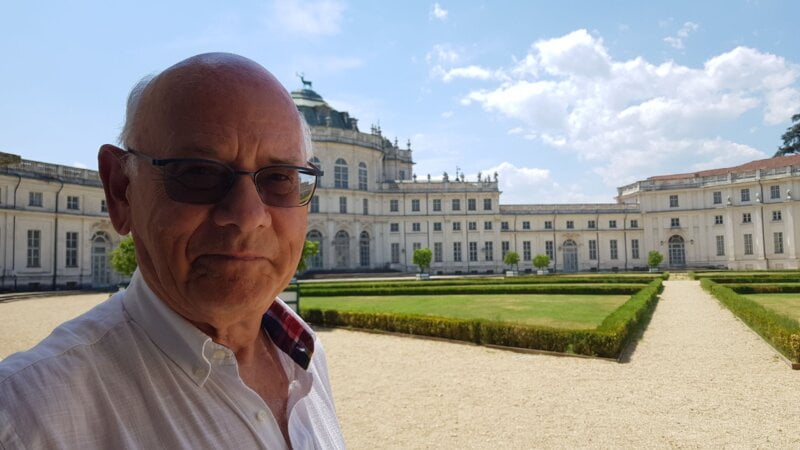
Hans-Juergen Wiegand is a man who lives his work passions and family, with determination. A philanthropist, who has held important positions in the chemical and automotive world, in particular with Daimler AG (Mercedes-Benz). He loves to travel, attaining knowledge and experience from different cultures. These experiences have shaped him, with a particular acumen in recognizing the best in human beings. Hans thrives on helping young people, to realize their dreams, as he has realized his own. Hans is an inspirational leader, with the competence to restructure and transform organizations. He is very flexible with people, and stands like a rock when it comes to principles. Whatever happens, he will always stay positive.
.
.