

The museum of the Uffizi Gallery, constitutes for quantity and quality of the works collected one of the most important museums in the world. It contains the most important existing collection of Raffaello and Botticelli, as well as fundamental groups of works by Giotto, Tiziano, Veronese, Tintoretto, Pontormo, Bronzino, Caravaggio, Dürer, Rubens and others. Inside are housed some of the greatest masterpieces of humanity: Cimabue, Leonardo da Vinci, Michelangelo, Raphael, Mantegna, Titian, Parmigianino, Dürer, Rubens, Rembrandt, Canaletto and Sandro Botticelli.

Nel 2009, a cento anni dalla morte di Cesare Lombroso, fondatore dell’antropologia criminale, si è riallestito il “suo” museo, unico al mondo. Le collezioni comprendono preparati anatomici, disegni, fotografie, corpi di reato, scritti e produzioni artigianali e artistiche, anche di pregio, realizzate da internati nei manicomi e da carcerati. Il nuovo allestimento vuole fornire al visitatore gli strumenti concettuali per comprendere come e perché questo personaggio così controverso formulò la teoria dell’atavismo criminale e quali furono gli errori di metodo scientifico che lo portarono a fondare una scienza poi risultata errata.
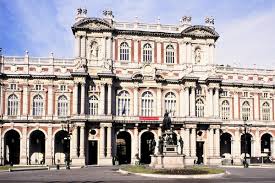
The National Museum of the Italian Risorgimento is the largest exhibition space in Italian history, the oldest and most important museum dedicated to the Italian Risorgimento. The museum, which was completely re-opened and reopened in 2011, dates back to 1878, when Turin, following the transfer of the capital, wanted to underline its contribution to the process of national unification. The National Museum of the Italian Risorgimento has been profoundly renewed, and today offers visitors outstanding displays and services in Palazzo Carignano where the collections are housed. Lighting and room colours, the choice of which is always based on the themes in question, and the use of multimedia aids guarantee visitors a unique experience. The period of the Risorgimento is now recounted from a European viewpoint as well as through the eyes of Turin, Piedmont and Italy. The rooms have been enriched with films created with images from the most important European collections and can be viewed on large screens, while extensive interactive displays help visitors to examine the themes presented in the films in greater depth.
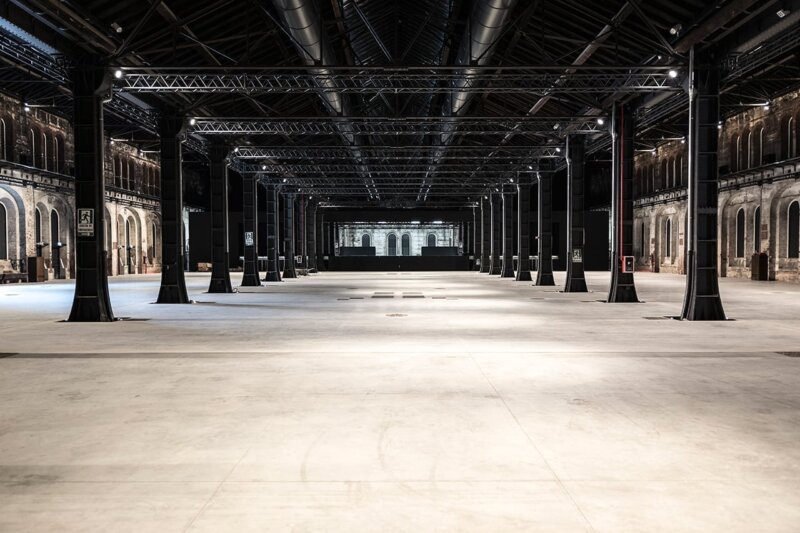
L'architettura industriale delle OGR Officine Grandi Riparazioni, oggi posizionata nel cuore di Torino - in corso Castelfidardo, a pochi metri da Porta Susa e a 50 minuti da Milano con l'alta velocità- ospiterà, in continua rotazione, mostre, spettacoli, concerti - dalla musica classica a quella elettronica - eventi di teatro, danza e arti performative, laboratori, start up, imprese innovative - dai Big Data al gaming - unendo le idee e i valori della creatività con gli strumenti e i linguaggi delle nuove tecnologie digitali.

The Royal Palace of Turin is the first and most important of the Savoy residences in Piedmont, theater of the Savoy kingdom for at least three centuries. Official residence of the Savoy until 1865, formerly Palazzo del Vescovo, it was transformed by Ascanio Vitozzi (1584) for Carlo Emanuele I and subsequently enlarged and renovated with an uninterrupted series of interventions in which the major architects and artists working in Turin took part in the 18th century and nineteenth century.

Inaugurated in 2002 on the top floor of the Lingotto complex, the pinacoteca collects a selection of works from the private collection of Gianni and Marella Agnelli. The collection is housed in the "casket", a steel body with a surface of 450 square meters raised to 34 meters from the test track on the roof of the plant. The structure is the work of the architect Renzo Piano. The architectural style represents a starship of crystals that symbolically recalls the futurist style of the original factory. In addition to the permanent collection, the museum periodically hosts temporary exhibitions of modern art.

Superga, Soperga in Piedmont, is one of the highest hills (672 m asl) of Torino, which rises east of the city center, on which the basilica of the same name is built .The Basilica is dedicated to the Madonna delle Grazie, whose wooden statue is kept in the Chapel of the Vow. You can also reach it with the Sassi-Superga cog railway, about 3 km long, using the original wagons of 1884.
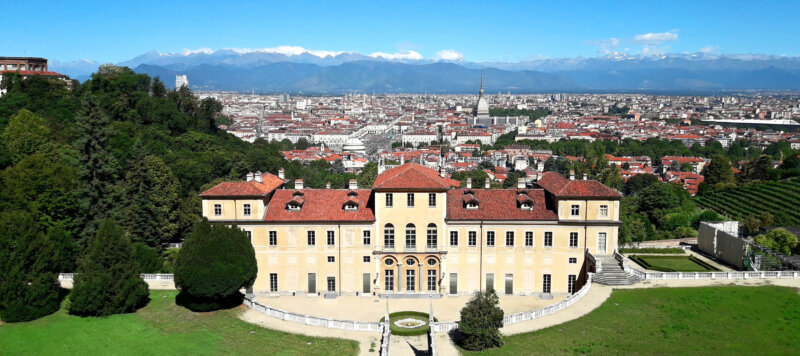
Villa della Regina, part of Turin muesums Complex, was commissioned by Cardinal Maurizio di Savoia, built according to a project by Ascanio Vitozzi at the beginning of the 17th century. It was restructured according to a project bVilla della Reginay Juvarra that in the first half of the eighteenth century paid particular attention to the villa in relation to the gardens. Reopened to the public after a careful restoration, it rediscovers the ancient splendor, scenographic backdrop of the city, in the center of the Italian gardens with pavilions, water games and agricultural areas that are once again productive. On the hills behind the villa, a famous vineyards produces red sapcial wine.

The rich exhibition Armeria Reale occupies three rooms connected to the hall of the Palazzo Reale halls: the Sala della Rotonda, so-called because the link between Palazzo Reale and Palazzo Madama, the magnificent Beaumont Gallery and the Medagliere, specially designed, were inserted here. from Pelagio Palagi to collect coins, medals and seals belonging to the Royal House.

At I mosaici di Lastrucci all mosaics are entirely produced in the according to the original techniques dating back to the 16th century, which highlight the natural colour of every stone. The tools used are of ancient origin; progress and technology have not been able to create suitable substitutes for them, because the original tools were crafted for recreating a sense of beauty that modern technology is unable to reproduce. All mosaics are entirely produced by the Masters Iacopo and Bruno Lastrucci.

Architect Alberto Brandinali of Studio Bipiuesse believes that pace is a precious good. In any context, we operate and at any scale, from the single environment to the building and in all the sectors that see us involved: private homes, residential buildings, social welfare facilities, private villas, public places. The aim of our work is to realize effective projects that are able to organize and transform the space in harmony with the needs of those who will use it and will live it. We believe that the project should have a lasting impact on people and the environment.

For 700 years, the Frescobaldi family has combined tradition, experience and innovation with creativity and the pursuit of excellence. The family has always looked to develop and celebrate the diversity of Tuscany’s terroir. Being proud owners of some of the greatest vineyards in this region they have always sought to maintain the identity and autonomy of each property. Frescobaldi represents the true diversity of Tuscany and its six estates, are all located in the most suitable areas for the production of fine wines. Donna Bona Frescobaldi is the continuation of all this with charm, intelligence and care for the traditions and art.

CAM Carlo Arborio Mella Arts Consulting, founded in 2013, operates in the world of the arts with particular reference to cultured music and fine arts. Its activities, including Florence, Milan and Turin, range from the training sector to the 2.0 communication sector, to the enhancement and development of the Italian musical heritage together with the enucleation of new musical paths linked to cultural heritage.

Advancing Women Artists closed its doors on June 30, 2021. Although the organization is no longer operative, the website will remain accessible as a digital archive and a resource for those interested in research, restoration and exhibition of art by women in Florence. By giving a voice to historic women artists, AWA Advancing Woman Artists rescues and reclaims the ‘hidden half’ of Florence’s art. Women world-wide band together to support art and conservation. Myriad paintings and sculptures by ground-breaking women artists have been overlooked for centuries, and many works are currently in need of restoration.

Man, his needs and his well-being are at the centre of design for Architect Nadia Battaglio. Designing spaces means pre-seeing the future by investigating the possible ways to exploit them and live them: feel the air, the light and the scents that come from the windows, the heat that will emanate in a fireplace, the colours and fabrics that will animate the walls....means having an overview. The architecture of a house is similar to a dress, it must be tailor-made for the person who will live it.

Architects Studio 10 is our will to do normally human projects, the result of uncommon reflections on common feelings. Our goal is to convey the understanding that a better project can lead to a better life through a design able to calm the mind and cause pleasure, while maintaining the ability to increase the value of the investment. The partnership between Roberto Baccioni and Simona Bianchi began with the design of museum displays and with the renovation of luxury homes.Currently, among other clients, they are restoring palaces in Italy for Gucci Brand and family.

The exhibition Artigianato e Palazzo artisan workshops and their commissions, now in its 25th edition to be held at the Corsini Garden in Florence, was founded in 1995, from an idea by Neri Torrigiani and promoted by the princess Giorgiana Corsini, mainly to re-evaluate the figure of the artisan and his work to the present day, considering it a high expression of quality and technique, linked to the client, but insisting on the idea of a "modern" handicraft, without forgetting the fundamental element of tradition. And speaking of "artifact" (from the Latin "manu facere": doing with the hands), the exhibitors of ARTIGIANATO E PALAZZO have always been called aloud to show live the various processing techniques in which they excel. Along the exhibition itinerary, the visitor is led to discover how the craftsman manually creates the product by making it live in small workshops reconstructed in the Garden and in the Limonaie. La mostra Le botteghe artigiane Artigianato e Palazzo e le loro committenti, giunta alla sua 25° edizione al Giardino Corsini di Firenze, nasce nel 1995, da un'idea di Neri Torrigiani e promossa dalla principessa Giorgiana Corsini, principalmente per rivalutare la figura dell'artigiano e il suo lavoro fino ai giorni nostri, considerandolo un'alta espressione di qualità e tecnica, legata al cliente, ma insistendo sull'idea di un artigianato "moderno", senza dimenticare l'elemento fondamentale della tradizione. E a proposito di "manufatto" (dal latino "manu facere": fare con le mani), gli espositori di ARTIGIANATO E PALAZZO sono sempre stati chiamati ad alta voce per mostrare dal vivo le varie tecniche di lavorazione in cui eccellono. Lungo il percorso espositivo, il visitatore è portato a scoprire come l'artigiano crea manualmente il prodotto facendolo vivere in piccole botteghe ricostruite nell'Orto e nelle Limonaie.

Elisabetta Marongiu is an Architect specializing in conservation and restoration of heritage at the Turin Polytechnic, she divides her work between Turin and Basel. Born as a restoration technician, she develops her professional skills on-the-job site by acquiring skills in managing and scheduling work. Passionate about painting, music and photography, she loves art in all its forms. "To achieve great things, we must not only act but also dream; not only to design but also to believe“ Anatole France.

Dopo il conseguimento della maturità classica frequenta la facoltà di architettura, orientando la sua formazione all'approfondimento della storia e delle metodologie di restauro degli edifici di rilevante interesse storico e artistico. Laureatasi con il massimo dei voti e lode, apre il proprio studio portando avanti parallelamente l'attività didattica nel corso di Storia dell'Architettura tenuto dal Prof. F. Borsi, presso la Facoltà di Architettura di Firenze. Dal 1990 al 2008 opera attivamente all'interno dell'ADSI, Associazione Dimore Storiche Italiane, prima come rappresentante della sezione giovanile per la Toscana, in seguito come membro del consiglio nazionale. Discendente di una delle nobili famiglie del vino italiano, sin dall'inizio della sua carriera si dedica alla progettazione di cantine e di spazi dedicati al vino, divenendo in tal senso uno dei progettisti più proliferi ed innovativi in Italia. Lo studio nato a Firenze nel 1993 si occupa di progetti a diversa scala intervenendo prevalentemente su edifici monumentali, nel pieno rispetto delle radici storiche delle preesistenze con attenzione alle necessità degli stili di vita contemporanei. Un team di professionisti sviluppa i progetti in ogni dettaglio partendo dal restauro delle preesistenze per reinventare spazi nuovi interamente disegnati - dai complementi d'arredo fino agli interventi paesaggistici - con particolare attenzione al recupero delle tecnologie e dei materiali locali. Negli anni lo studio ha maturato una notevole esperienza nella realizzazione di cantine vinicole, proponendo soluzioni innovative ed eco-compatibili che coniugano le esigenze funzionali e produttive con l'estetica architettonica locale ed il paesaggio circostante. After the attainment of the classical maturity he attended the faculty of architecture, directing his training to the deepening of the history and methods of restoration of buildings of significant historical and artistic interest. She graduated with full marks and honors, she opens her own studio carrying out the teaching activity in the course of History of Architecture held by Prof. F. Borsi, at the Faculty of Architecture in Florence. From 1990 to 2008 she actively worked within ADSI, the Italian Historic Houses Association, first as a representative of the youth section for Tuscany, then as a member of the national council. Descendant of one of the noble families of Italian wine, from the beginning of his career he devoted himself to the design of cellars and spaces dedicated to wine, thus becoming one of the most prolific and innovative designers in Italy. The studio born in Florence in 1993 deals with projects at different scales, mainly intervening on monumental buildings, in full respect of the historical roots of the pre-existing structures with attention to the needs of contemporary lifestyles. A team of professionals develops the projects in every detail starting from the restoration of pre-existing structures to reinvent entirely designed new spaces - from furnishing accessories to landscaping - with particular attention to the recovery of local technologies and materials. Over the years the studio has gained considerable experience in the construction of wine cellars, proposing innovative and eco-compatible solutions that combine functional and production needs with the local architectural aesthetics and the surrounding landscape.

Since 1938, our shop in Rome L.A.R. Paralumi welcomes and serves the Romans and patrons passing through the capital. The high quality of our work and the exclusivity of our products has been appreciated over the years by a large group of prominent people, and some of our Lumi furnish the most important Roman palaces. In our laboratory we make lampshades in every work, from the ancient lampshades in parchment stitched, to the pleats, passing through the classic lined in fabric.

From 1868 at Calce Piasco we extract limestone from our quarries and through the cooking in the ovens of the Piasco plant we transform it into live lime and its derivatives. We offer our customers eco-friendly and natural products, made by specialized personnel with modern means, aimed at satisfying multiple needs in different sectors. Lime proved to be useful in construction, in agriculture, in breeding, in the steel industry, in the purification and for numerous other applications.

Cà Albrizzi Interiors, was born from an idea of Alba Giannelli and Adalberto Cremonese, initially it was a bookbinding and cartonage laboratory, nowadays the activity carried out by her son Alessandro Giannelli who adds the sale of fabrics, mats, carpets, lighting, small furniture and gift items. Seated in the heart of Milano, today it's a luxury style for Interios.
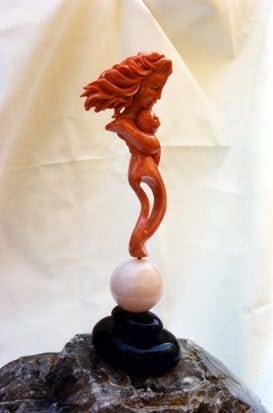
Alessio Sorrentino and his son Vincenzo create small works of art engraving corals, cameos, turquoise and precious shells. A real art, where the hands are guided by the original shape of the raw material, from which delicate and particular works arise. An ancient and unique work, handed down from father to son, a work of patience, dexterity, where the hands of Alessio and Vincenzo join the mind of Silvia and give the public objects of extraordinary beauty.
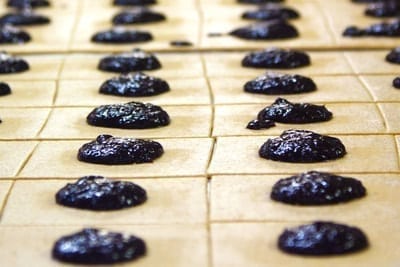
The organic biscuits of Zenzero Candito are still made by hand with wholemeal flour of ancient stone-ground grains. Zenzero Candito uses excellent organic raw materials from small local producers, the chestnuts of the Tuscan-Emilian Apennines, the Sicilian almonds of the Val di Noto, the hazelnuts of the Altalanga. Each biscuit is handmade as it once was, always guaranteeing the maximum naturalness and genuineness of each of our products. From December 2015 the biscuit is certified organic. ]/box]

Among the rolling hills of Recanati, the Agriturismo Raggio Verde, ideal for spending pleasant holidays in the Marche region. The farmhouse, completely renovated, obtained from an old farmhouse, offers a synthesis of the Marche's motifs: nature, tranquillity, marvellous scenery, history, and culture. The Agriturismo Raggioverde is located on top of a hill and looks directly towards the historic centre of Recanati (just 5 km), offering a "postcard" view.

Antico Forno Santi svolge da molti anni la propria attività a Migliana, borgo immerso nel verde della bellissima Valle del Bisenzio, alle porte di Prato. In un piccolo e caratteristico laboratorio sono nati i nostri biscotti grazie alla creatività e alla passione di Leonardo Santi, il nostro maestro. Grazie ai suoi insegnamenti abbiamo imparato il rispetto per la tradizione e i segreti delle vecchie ricette che oggi ci permettono di presentare con grande orgoglio e soddisfazione il frutto del nostro lavoro. Benvenuti dunque in questo piccolo mondo di dolcezza. Antico Forno Santi has been operating for many years in Migliana, a village immersed in the greenery of the beautiful Bisenzio Valley, just outside Prato. Our biscuits were born in a small and characteristic laboratory thanks to the creativity and passion of Leonardo Santi, our master. Thanks to his teachings we have learned respect for tradition and the secrets of old recipes that today allow us to present the fruit of our work with great pride and satisfaction. So welcome to this little world of sweetness.


Alison Woolley started her career as an apprentice in a traditional Florentine ‘bottega’ decorating furniture in the Renaissance style. Over the years she specialized work blossomed into expertise in creating luxuriously decorated surfaces of many kinds, from interior murals to fabric and stencil design. Today, you can see the artist's refined and meticulous hand on works such as two hand-painted harpsichords for the Opera of Versailles and designs for Salvatore Ferragamo. Alison is a professional artist and decorator specialized in Italian painted furniture, owner of Florenceart.net, a painting and decoration studio in Florence Italy. Alison graduated with honours after winning two scholarships from the Ontario College of Art and Design in Canada. She moved to Florence and worked for more than 15 years under the guidance of Florentine master artisans before opening her own bottega in Via San Bartolo a Cintoia 97. Her bottega produces fine furniture finishes and decorative art for the interior design industry worldwide. 'I came as a student in 1987 to Florence and was captured by the special beauty of this city and the Florentine people. The atmosphere inside a true old style Florentine bottega is something rare that I view as a gift that was given to me, and that I would like to share. These artisans taught me a way of working, a set of skills, and an appreciation for fine European antiques and decorative work that remains the basis of my daily work.' Alison’s work has been exhibited in various international decorative design shows:

Andrea Besana, classe 1975, artigiano con un diploma in grafica pubblicitaria nel 1994, si ri-diploma alla Scuola di Mosaico di Spilimbergo nel 2002. Vincitore di significativi premi di settore, è un artista del mosaico e mastro terrazziere, con al suo attivo importanti lavori e opere realizzate in Italia e all'estero. Parallelamente si occupa di mosaico contemporaneo e di opere musive, apprezzandone la libertà compositiva e il forte potere evocativo. Il suo laboratorio è specializzato in progettazione mosaici, realizzazione ex novo e restauro di pavimentazioni monolitiche e alla Veneziana. Andrea Besana, born in 1975, artisan with a diploma in advertising graphics in 1994, he re-graduated from the Mosaic School of Spilimbergo in 2002. Winner of significant industry awards, he is a mosaic artist and master terrace maker, with important works and works carried out in Italy and abroad. At the same time he deals with contemporary mosaics and mosaic works, appreciating their compositional freedom and strong evocative power. His workshop specializes in mosaic design, construction from scratch and restoration of monolithic and Venetian flooring.

Independent Museums and Institutions Professional, Journalist, and art expert. Andreina d'Agliano is the greatest expert in antique ceramics and porcelains. During her travels around the world, she studied deeply different styles and technics, especially in the East countries. After many years in Rome she moved to Turin and now she has many important roles in Museums and Associations among them she is Curator of the Exhibitions in Torino, Museo Accorsi and President of Filatioio di Caraglio, Cuneo.
.
.

.