
.
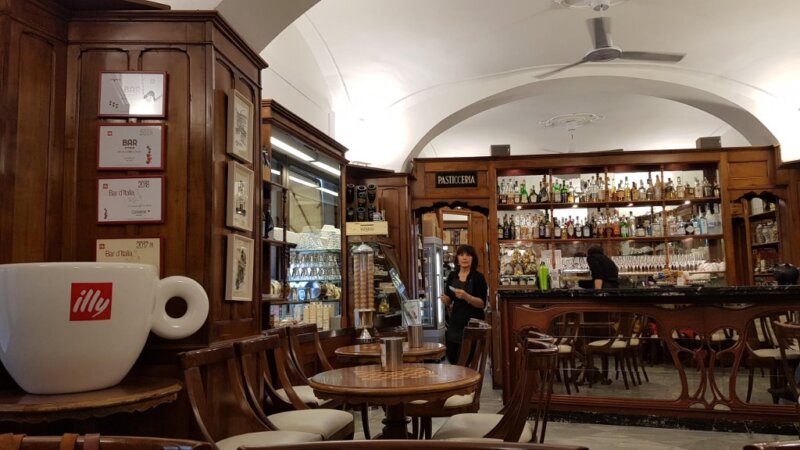
Il Bar Pasticceria Converso prende il via nel lontano 1838, grazie ad una licenza di esercizio di confetteria, ottenuta dal capostipite della famiglia Converso. Ma è agli albori del secolo che Felice Converso, il nipote del fondatore, apre nella centralissima via Vittorio Emanuele, la liquoreria, nonché Bar Pasticceria Gelateria di Bra, di cui ancora porta il nome. Successivamente divenuto luogo di ritrovo degli anni novanta di proprietà della famiglia Boglione, oggi il Bar si effigia di un riconoscimento di tutto rispetto, infatti, grazie ai suoi illustri trascorsi storici e grazie all’unicità dei suoi interni, è diventato membro dei "Locali storici d'Italia", associazione patrocinata dal Ministero per i Beni e le Attività Culturali. Tutt’ora vengono riproposte le classiche specialità come: le caramelle genziana e menta, la pasticceria mignon dolce e salata, la pralineria, i braidesi di cioccolato al rhum, i gianduiotti, i gelati, i marron glace, i panettoni al moscato senza canditi, ma con un impasto arricchito da uvetta macerata nel moscato ed altre sorprese di fantasia dolciaria.
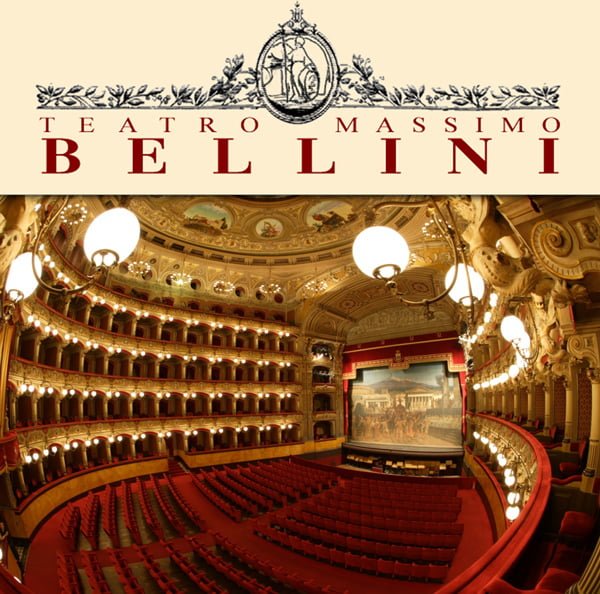
The Teatro Massimo Bellini is an opera house in Catania, Sicily, southern Italy. Named after the local-born composer Vincenzo Bellini, it was inaugurated on 31 May 1890 with a performance of the composer's masterwork, Norma. The creation of what was to finally become the Teatro Massimo Bellini took almost two hundred years, beginning with discussions following the disastrous 1693 earthquake which completely destroyed Catania. The construction of a public theatre was discussed, and a foundation stone was finally laid in 1812. Throughout its history, the opera house has performed almost all of Bellini's work. From its beginnings, a wide variety of operas have been performed by some highly renowned singers. In 1951, to mark the 150th anniversary of the birth of Bellini, Maria Callas sang Norma, repeating her success in 1952 and 1953. In recent years, there has been an infusion of about $2 million, leading to the celebration of the Bellini bicentennial during the 2001 season and to a major renovation of the house.

The Cassa di Risparmio di Torino Foundation, or Fondazione CRT is a private, non-profit legal entity, endowed with full statutory and management autonomy. He has always held an important social function of redistribution of wealth, both in the form of charity in the strict sense, and also alongside public initiatives. The Foundation exclusively pursues aims of social utility and promotion of economic development, directing its activity and allocating resources in the fields of scientific research, education, art, conservation and enhancement of cultural assets and activities and environmental assets, health care and assistance to weak social categories. The Foundation’s operational area is mainly composed of Piedmont and Valle d’Aosta. Fondazione CRT è un ente privato non profit nato nel 1991 e da 30 anni è un “motore” di sviluppo e crescita del Piemonte e della Valle d’Aosta. Grazie a progetti e risorse proprie, è impegnata costantemente nella valorizzazione dei beni artistici e culturali, nella ricerca scientifica e la formazione dei giovani, l’imprenditoria sociale e l’assistenza, la salvaguardia dell’ambiente e delle persone.
Susan Kleinberg is a New York-based artist. Her latest video installation piece, HELIX, derived from her work with the scientific team of the Louvre in April 2018, premiered in at the Museo Internazionale delle marionette Antonio Pasqualino in Palermo, Italy on June 2018, coinciding with Manifesta 2018 in Palermo. Susan works for a better world. She spoke with a wide range of people, primarily the least visible in our society, about what would make for a better world. The still photographs, which I took afterwards, were linked to the audio on a DVD. The densely colored DVD runs on plasma screens mounted on the walls. Hanging from the ceiling were painted Chinese fans with the photographs of the participants embedded into them. Visitors fanned themselves in the warm Turkish breeze, as they watched and listened.

The complex of Santa Maria Novella, one of the most beautiful and famous art treasures in Florence, by its nature is either a religious and a museum site. It has currently a new form that seeks to harmonize both the functions. Basilica of Santa Maria Novella was founded by the monks of Dominican Order in the first half of the thirteenth century, becoming one of the most important points of religious and artistic interest in Italy. The celebrity of Santa Maria Novella during the Middle Ages and Renaissance period attracted important artists such as Giotto, Brunelleschi, Masaccio, Michelangelo, Ghirlandaio, Botticelli and Vasari (just name a few), who realized beautiful artworks inside the complex. This particular artistic and religious fortune bound forever the place to its artwork.
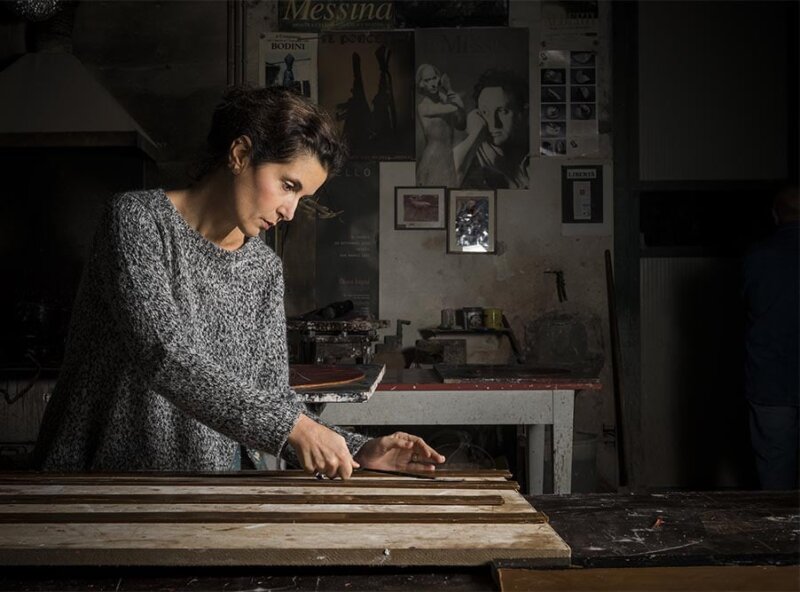
During her childhood in Rome, Osanna and her sister Turchese would play with pieces of art created for their mother by Lucio Fontana, Mario Ceroli and Arnaldo Pomodoro. It could be said that the pieces she creates today are inspired by those wonderful memories, or, maybe, are a result of her own femininity….or maybe both. In recent years, Osanna's attention has focused increasingly on objects and furnishings. Artisanally made, every creation is modeled by hand from wax which is then fused in art foundry. Creations conceived as sculptures, metals blended to create flashes of antique gold: An aesthetic of exclusivity, research on forms and desire to explore shapes are integral parts that inform Osanna Visconti di Modrone designs.

Sculptor and entrepreneur Piero Morseletto was born in Vicenza on December 23rd 1887. He studied first at the Accademia Olimpica in Vicenza and then at Milan’s Accademia Brera, where he was awarded two Gold Medals as best pupil. Later he was to be awarded the Gold Medal as a Master Craftsman and exhibited at the Venice Biennale, the Milan Triennale and other important events. Soon he combined his skills as a sculptor with those of an entrepreneur, founding Bottega Morseletto, specialized in realization of ornate workmanship with Vicenza Stone. There, craftsmen worked on this stone over the decades, building up a set of technical and productive skills that enabled them to perform any sculpture- or architecture-related task. These years featured restoration of the highest level of such architectural monuments as the Palladian Basilica and the Loggia del Capitaniato in Vicenza (by Andrea Palladio), the Municipal Theatres of Bologna, Carpi, Lugo, Ravenna and Faenza, Palazzo Bevilacqua in Verona (by Michele Sanmicheli) and many others.

The Ferragamo family founded the museum in May 1995 to acquaint an international audience with the artistic qualities of Salvatore Ferragamo and the role he played in the history of footwear and international fashion. Like most corporate museums, Museo Salvatore Ferragamo and its archives stem from the vision of an entrepreneur, in this case it was Salvatore Ferragamo’s widow, Wanda, who headed the company since the founder’s death in 1960, and her six children. In particular, the eldest of their children, Fiamma, who managed the company’s core footwear and leather goods business after her father’s death, stood at this project’s helm on behalf of her family and brought it to life, shaping its strategy with the assistance of historians and archivists. The idea for the museum initially came about when an exhibition was organised at Palazzo Strozzi on the history of Salvatore Ferragamo. The exhibition went on tour and was hosted by some of the world’s most prestigious museums, such as the Victoria and Albert in London, the Los Angeles County Museum of Art, the Sogetsu Kai Foundation in Tokyo, and the Museo de Bellas Artes in Mexico. The temporary exhibition gradually became permanent. Since mid-1990s, the museum has organised several exhibitions to portray the history of the founder and to show the opening and interest of a company through different artistic languages, ranging from design to fashion, as means to communication for the dissemination of a style of living and dressing. In recognition of the museum’s cultural importance and that of its many initiatives over the years, in 1999, Salvatore Ferragamo received the Guggenheim Impresa e Cultura Award, given annually to companies that best invest in culture to constructive ends. From 2006, in order to make the life of the museum as dynamic as the life of the company, it was decided to modify its exhibition structure and to select every year a different research theme that, starting from the experience of Salvatore Ferragamo, the history of his life, his creations, the customers he served and his values, gives the opportunity to discover the world of Ferragamo in an indirect way combined with other cultural expressions such as Art, Architecture, Design, economic and social History and Philosophy. Each time the museum looks different, with different set-up and different contents. Museo Salvatore Ferragamo is also a founding member of Museimpresa, the Italian association of museums and business archives promoted by Assolombarda and Confindustria, established with the purpose of disclosing the historical knowledge of the Italian companies that set the basis of Made in Italy. In November 2015, the museum became the first green corporate museum in Italy. The project set up by Museimpresa and Confindustria with the aim at creating the world's first network of sustainable corporate museums that quantify their CO2 emissions, led Museo Salvatore Ferragamo to achieve the international certification ISO 14064 dealing with the quantification and reporting of the greenhouse gas emissions. Since November 2016, the museum has officially joined ICOM (International Council of Museums), the most important and prestigious international organization of museums and museum professionals. Composed by over 35,000 members and by a forum that brings together experts from 136 countries and territories, it represents the museum community as a whole.

Sebbene il nome "Albertina" si riferisca a Carlo Alberto di Savoia, al quale si deve la decisiva "rifondazione" dell'Accademia nel 1833, le sue origini sono ben più lontane, tanto che l'Accademia di Torino può essere considerata una delle più antiche d'Italia. Negli ultimi anni l'Accademia Albertina si è ulteriormente trasformata e rinnovata, promuovendo numerose iniziative educative e culturali che hanno portato al: riordino e la riapertura al pubblico della Pinacoteca, il restauro dell'edificio e la razionalizzazione degli spazi interni (tuttora in corso), l'intensa attività di mostre, convegni, seminari ed eventi, la massiccia introduzione dell' informatica in Accademia e l'istituzione del nuovo corso sperimentale di Conservazione e Restauro a partire dall'anno scolastico 1997-98. Dal 2019 Paola Gribaudo, la prima donna a diventarne la direttrice, sta lavorando con grande forza e innovazione per farla diventare un irrinunciabile centro di cultura per la città e la nazione. Although the name "Albertina" refers to Carlo Alberto di Savoia, to whom we owe the decisive "re-foundation" of the Academy in 1833, its origins are much more remote, so much so that the Turin Academy can be considered one of the oldest in Italy. In recent years the Accademia Albertina has further transformed and renewed itself, promoting numerous educational and cultural initiatives. In this case, the reorganization and reopening to the public of the Pinacoteca, the restoration of the building and the rationalization of the internal spaces (still in progress), the intense activity of exhibitions, conferences, seminars and events, the massive introduction of the computer science in the Academy and the institution of the new experimental course of Conservation and Restoration starting from the school year 1997-98. Since 2019 Paola Gribaudo, the first woman to become its director, is working with great strength and innovation driving it to become an indispensable center of culture for the city and the nation.

Paola Gribaudo, a graduate in Literature and Philosophy in Turin, is the first woman to become Director over the Turin Academy of Arts. Daughter of the famous artist Ezio Gribaudo, who was President of the Academy from 2005 to 2007, and now Honorary President, she inherited from her father the passion for art, the deep interest in culture and international creativity, the will to transmit the sense of research and a language in constant evolution. Collaborator of the publishing houses Skira, Gli Ori, De Agostini, Electa, Rizzoli Internationale, Silvana Editoriale and Thames & Hudson, Paola Gribaudo received in 2011 the honor of "Chevalier de l'Ordre des Arts et des Lettres" by the French Minister of Culture Frédéric Mitterand. From her father, who has always followed closely, Paola Gribaudo inherited the passion for her work, perfecting it in continuous travel around the world, weaving strong relationships with artists and intellectuals. These include Botero, Rauschenberg, Nobel laureates Garcia Marquez and Iosif Brodskij. She is expanding the strength of The Accademia Albertina organizing international shows and exhibitions.

Nel Vecchio Mulino il passato e il presente si vogliono incontrare, trovando in Pietro e Ludovico la volontà e il piacere di raccontare e far rivivere in chiave moderna un'arte fondamentale per la vita dell’uomo. Il vecchio mulino conta due macine attualmente operative per cui possiamo parlare de – i mulini- destinati alla macinazione di cereali differenti. Le nostre pietre infatti, l’una naturale l’altra assemblaggio di quarzite, hanno superfici di lavoro differenti: l’una rigata (generalmente detta da grano) l’altra bocciardata (generalmente detta da mais o da “meliga”). Il mulino inteso come impianto nasce elettrico: un motore aziona la trasmissione e questa ingrana le macine, governate dall’abilità del mugnaio che con un volante distanzia le pietre determinando così la consistenza della farina. Produciamo farine di mais, di grano saraceno, di castagne, di frumento, di segale, di riso.
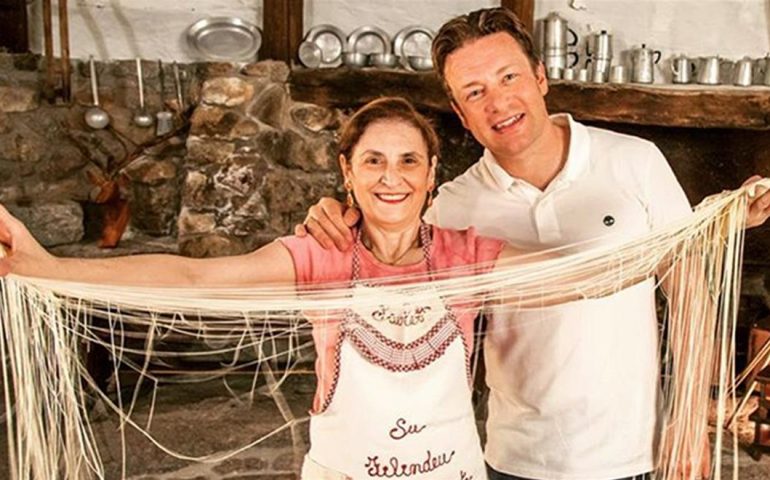
Paola Abraini regina e custode de su Filindeu, i fili di Dio, la pasta che nessuno sa imitare. Paola, 65 anni, nuorese, ha imparato a fare su Filindeu dalla suocera all’età di 16 anni. Da allora ha insegnato questa nobile arte alle figlie e ai parenti e attualmente sono solo dieci le persone al mondo capaci di fare questo tipo di pasta. Lei è ormai famosa grazie alla Bbc, alla Cnn, e ai tanti chef come Jamie Oliver e altre importanti celebrità che vanno a trovarla per imparare a fare questa specialità. Nessuno di loro però è mai riuscito a creare su Filindeu come fa lei. Signora Paola lo vende ad alcuni ristoranti di Nuoro e dintorni. Paola Abraini queen and custodian de su Filindeu, the threads of God, the pasta that nobody knows how to imitate. Paola, 65, from Nuoro, learned to do on Filindeu by her mother-in-law at the age of 16. Since then she has taught this noble art to her daughters and relatives and currently there are only ten people in the world capable of making this type of pasta. She is now famous thanks to the BBC, the CNN, and the many chefs like Jamie Oliver and other important celebrities who visit her to learn how to do this specialty. However, none of them has ever managed to create on Filindeu as she does. Signora Paola sells it to some restaurants in Nuoro and surroundings.

L'azienda Fratelli Feltracco è rinomata e conosciuta nella realizzazione e nel restauro di terrazzi e pastelloni alla veneziana, in particolare di cotto e calce, nella creazione di mosaici con riproduzione storica degli stessi e nella stesura di pavimenti con qualsiasi tipologia di marmo e pietre di nostra lavorazione, in particolare operiamo nell’ambito italiano ed europeo in Ville e Palazzi Storico-Culturali-Monumentali e Sacrali. Fratelli Feltracco realizzano su commessa oggettistica per interior design come tavoli, sedie e piani cucina. Utilizzano prodotti naturali e lavorano con le più svariate e prestigiose terre naturali presenti al mondo. Fratelli Feltracco opera con prodotti risalenti all’epoca rinascimentale e con sistemi all’avanguardia, come la nostra esclusiva levigatura completamente a secco ed immediata aspirazione delle polveri dei pavimenti. La loro missione è la salvaguardia dei pavimenti storici, valorizzando le nuove pavimentazioni usando gli stessi materiali antichi e di un tempo, materiali completamente naturali, biocompatibili ed estremamente bioriclabili. Per loro è basilare innanzitutto capire in che epoca il terrazzo è stato costruito, individuare i materiali con cui è composto ed intervenire in modo da non stravolgere le sue caratteristiche storiche. Il loro valori sono il riutilizzo di materiali naturali e il non utilizzo di prodotti nocivi o dannosi, rispettosi quindi dell’uomo e dell’ambiente. Per Fratelli Feltracco è di fondamentale importanza rispettare la tradizione e la storia nella ricostruzione degli stessi. Durante il restauro del terrazzo alla veneziana, vengono utilizzati gli stessi materiali naturali di un tempo per ricostruire fedelmente ogni particolare con il giusto valore cromatico e la giusta valenza granulometrica. Fratelli Feltracco sia nel nuovo che nel restauro del terrazzo storico utilizza una levigatura a secco, aspirando contemporaneamente, in quanto, grazie a questo procedimento si migliorano i risultati cromatici e si ottimizzano le tempistiche di lavorazione, ottenendo in tal modo la perfetta ricostruzione dell’originale storico.

Grazia Lombardi, nata a Torino nel 1971, vive e lavora nella sua città natale. Dopo il diploma al “Primo Liceo Artistico” di Torino, ha frequentato il corso di Decorazione presso l’Accademia di Belle Arti di Torino con il Prof. Nicola Maria Martino. Successivamente si specializza a Ravenna in tecniche di mosaico antico. Dal 2014 conduce un seminario workshop annuale di mosaico, presso il Centro Conservazione e Restauro La Venaria Reale. Ha collaborato con la Craviolatti Mosaici di Torino in qualità di mosaicista e con Diego Maria Gugliermetto per i rivestimenti di elementi di interior design. Grazia Lombardi ha preso coscienza di essere un artigiano, perché ha imparato a piegare le sue abilità tecniche alle esigenze dei luoghi e al continuo confronto col committente. Di conseguenza, quasi senza soluzione di continuità, si è scoperta artista, poiché ha iniziato spontaneamente a porre il lavoro in relazione sempre attiva con tempo e spazio, legando il suo prodotto alla quotidianità del destinatario. Per lei, in quanto operatrice artistica, l’estetica deve entrare nei meccanismi vitali, conquistare l’ordinarietà dell’esistenza di tutti, farsi simbolo dei riti di fondazione, di scoperta, di trasformazione. Per quanto riguarda le sue esperienze con la pittura, Grazia Lombardi ricorda sempre una frase della sua amica Maren Ollmann, artista fotografa, a proposito di un pavimento dipinto: “Ogni volta che lo guardo, mi emoziono” è questo e quello che lei vuole.
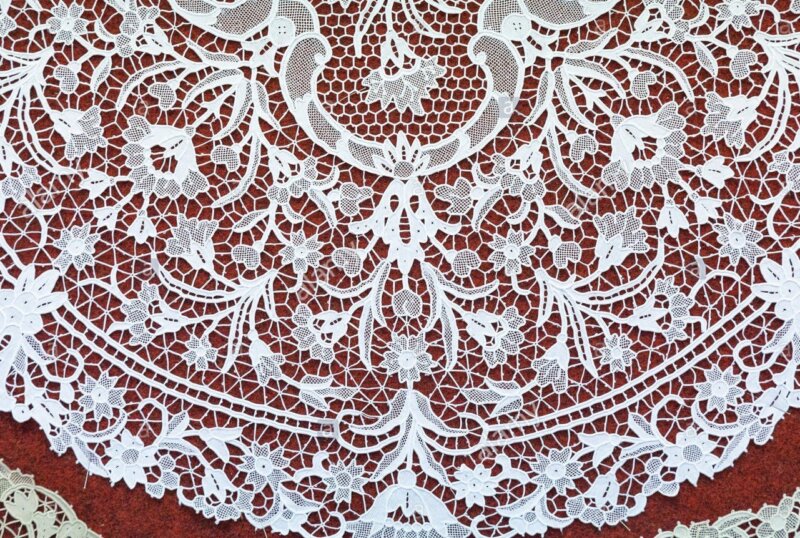
Merletto vuol dire Burano, case colorate e donne che in attesa dei mariti pescatori creavano e creano, con ago e filo, piccole meraviglie. E il famoso “punto Burano” non è altro che, in piccolo, il nodo usato per costruire le reti da pesca. Nel negozio “Dalla Lidia”, l’unico che si può vantare del titolo di “storico”, si possono incontrare Paola Toselli, titolare con il figlio Davide Bressanello dell’attività, e Regina Costantini mentre realizzano merletti. Lavoro certosino tra storie, leggende di un’isola delle meraviglie. Lace means Burano, colorful houses and women who, while waiting for their fishermen's husbands, created and created small wonders with thread and needle. And the famous "punto Burano" is nothing but, in small, the node used to build fishing nets. In the "Dalla Lidia" shop, the only one that can boast of the title of "historian", you can meet Paola Toselli, owner of her business with her son Davide Bressanello, and Regina Costantini while making lace. Carthusian work among stories, legends of an island of wonders.

Villa dal Verme e' considerata dagli studiosi la madre delle ville venete. Eretta verso la fine del '300 venne poi modificata nel suo aspetto castellare dall'inserimento nelle due facciate principali di due splendide trifore ad archi acuti trilobati secondo lo stile veneziano, a testimonianza della resa di vicenza nel 1404 alla serenissima repubblica. La villa fu costruita dalla ricca famiglia dei Dal Verme originaria di Verona e stabilitasi poi a Milano, Piacenza, Bobbio e Voghera. A pianta quadrata, rivolge il prospetto principale a sud, verso il canale Liona, sul quale affaccia un portico a due grandi archi a sesto ribassato di diversa ampiezza decentrati sulla sinistra. Al piano nobile si aprono simmetricamente una trifora in pietra tenera dei Berici ad archetti trilobati, affiancata da due monofore trilobate in cotto. Il fronte settentrionale è simmetrico e si apre verso la campagna, al piano terra, con un portale ad arco a tutto sesto in laterizi, mentre al piano nobile ripete lo stesso schema di aperture della facciata opposta con la trifora e le due monofore. È probabile che la primitiva villa sia sorta su resti di un edificio preesistente con funzione difensiva, trasformato poi in fondaco, base anche per scambi commerciali con Venezia, che avvenivano via acqua.
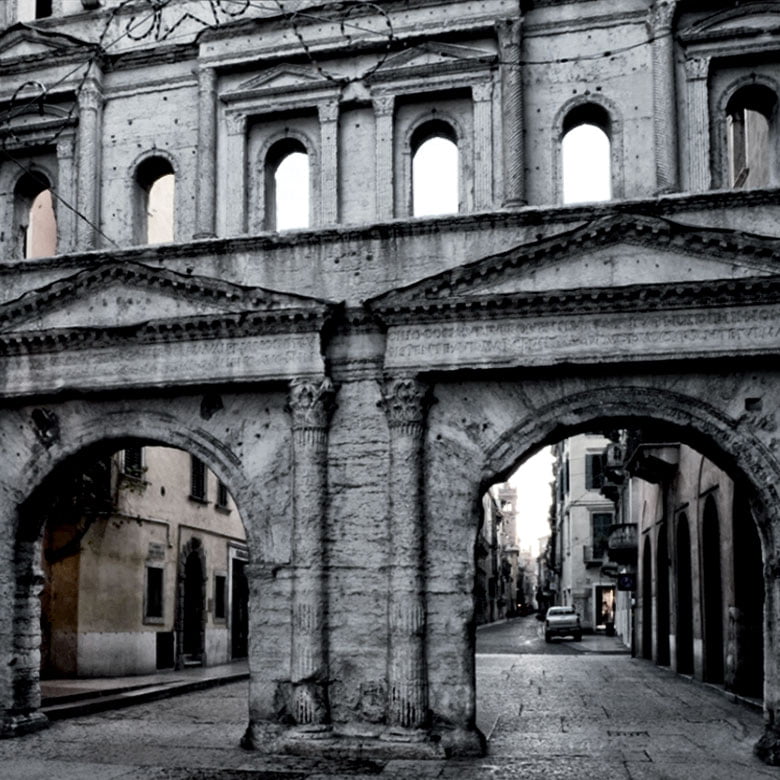
L'origine del prestigioso marchio Borsari nasce nella città di Verona, splendida città adagiata sulle rive dell'Adige e patria indiscussa del Pandoro. Nel lontano 1903, il mastro pasticcere Tiziano Golfetti ad aprire, dedicandolo alla Porta Borsari, il suo primo laboratorio artigiano. Dalle sue mani esperte nacquero numerose specialità dolciarie, tra cui in primis il tipico Pandoro morbido e profumato, ma anche Panettoni e Colombe con prelibate farciture alla crema e al cioccolato al profumo di vaniglia che, mastro Golfetti, memore delle mitiche "bursae", inseriva in astucci dipinti. Fedeli alla tradizione artigianale, che rese eccellente quei primi prodotti, i Muzzi, attuali proprietari dell'azienda Borsari, continuano a produrre mille specialità farcite, con la stessa cura dell'antica gloriosa pasticceria.
Taking our past into the future! As a mentor and director of initiatives dedicated to architectural heritage, craftsmanship, and innovation, I am committed to preserving our historical legacy. My goal is to ensure that our shared heritage continues to inspire future generations. With over thirty years of experience, I oversee restoration projects using traditional techniques and sustainable materials like lime to preserve architectural integrity worldwide. Colors are my passion. Selecting the right shade, especially with lime, requires meticulous research. The time invested in samples is precious, as it guides the client toward the best choice and ultimately streamlines the entire project. “Only when we fully understand where we come from and truly appreciate our heritage, can we imagine a fabulous future, built on the richness of our past. Our life is our project!” ~ Carolina Reviglio

Since the Etruscan era, Pietra di Rapolano is the travertine stone extracted near Siena, in Tuscany. Its chromatic characteristics make it unique, very different from any other travertine, and capable of giving your project a modern look with classic elegance. Given the richness of its nuances, the Tuscan travertine lends itself to creating various environments; it is a material whose technical characteristics make it suitable for every use. Its volume, details, and expressions are worked to perfection.

La "Fornace Polirone" prosegue l’attività plurisecolare della ‘Fornace Morselli’ di Mantova. Dal 1982 Alberto Cappelli e Roberto Pasqualini insieme alle sorelle Morselli, Nadia e Norma, riprendono l’attività in una vecchia fornace a Borgoforte in provincia di Mantova. Utilizzando i vecchi stampi in legno di noce si ricominciano a produrre svariate tipologie di manufatti (mattoni, cornici, pavimenti, vasi, ecct.) Nel tempo si è affinata la specializzazione nella fabbricazione di pavimenti su specifica o campione. Ai primi anni ’90 risalgono le commesse importanti che hanno fatto conoscere alle Soprintendenze e ai Tecnici più attenti i prodotti artigianali della Fornace, realizzando la pavimentazione al piano nobile di Palazzo Sanvitale di Parma, Chiesa dell’Incoronata a Sabbioneta, Villa Saraceno del Palladio ad Agugliaro –VI-.etc.. La continua ricerca e la passione fanno siche lavori e forniture sempre più impegnative ci venissero commissionate, quali la fornitura di oltre 1.000 mq per i palchi del Teatro alla Scala, la Chiesa di S. Cristoforo-Milano e il Castello Estense di Ferrara.oltre a numerose chiese. Nel corso del 2006 la Fornace Polirone ha pavimentato il Castello di Mirandola (3.000 mq), la Torre Medievale di Masana-Carpeneto Piacentino-, il Castello di Waimar in Germania e il Castello di Vaduz nel Liechtenstein ed un intervento importante nella Camera degli sposi del Mantegna nel castello S. Giorgio-MN. Questi traguardi prestigiosi gli inorgogliscono e gli spingono a mantenere sempre ad alto livello la qualità dei nostri manufatti. Fornace Polirone is continuig the centuries-old tradition of " Fornace Morselli" in Mantua. From 1982, Alberto Cappelli and Roberto Pasqualini, along with sisters Morselli (Nadia and Norma), restarted the activity in an old kiln in Borgoforte, near Mantua. Using the old walnut molds they restarted to produce various types of artifacts (bricks, frames, floors, vases, etc.) Over time, it has improved the specialization in floors manufacturing, on specification or on sample. In the early 90's, we received the major orders which made Fornace Polirone handicrafts known to the Authorities and to the most careful Architects. In fact, we realized the flooring of the main floor in Palazzo Sanvitale ( Parma), Chiesa dell'Incoronata in Sabbioneta, Palladio's Villa Saracena, etc. The continuous passion and research in our handicrafts resulted in works and supplies even more demanding, such as the supply of more than 1,000 sq.m. for the boxes in Teatro alla Scala (Milan), the Church of San Cristoforo (Milan) and Castello Estense in Ferrara, as well as many other churches. During 2006, Fornace Polirone floored Castello di Mirandola ( 3,000 sq.m.), Torre Medievale in Masana, near Carpaneto Piacentino, Castello di Weimar in Germany and Castello di Vaduz in Liechtenstein, as well as an important intervention on Mantegna's Camera degli Sposi in Castello di San Giorgio (Mantua). These prestigious achievements make them proud and encourage them to maintain high-level quality of our products.

Simona Lauro, restauratrice di opere d’arte su tela e su tavola, opere d’arte contemporanea e manufatti policromi. Entra nel mondo della conservazione nel 1990 lavorando presso prestigiosi laboratori milanesi, nel 1998 si trasferisce a Novara dove apre il suo studio e vive attualmente. Lavora regolarmente per le Diocesi del Piemonte, su dipinti, pale d’altare e manufatti lignei e collabora da diversi anni con diverse Case D’asta e collezionisti privati in particolare su opere d’arte moderna e contemporanea. Ultimamente ha iniziato una collaborazione con il Museo d’arte Moderna e contemporanea di Trento e Rovereto, prendendosi cura di alcune opere della collezione VAF STIFTUNG.
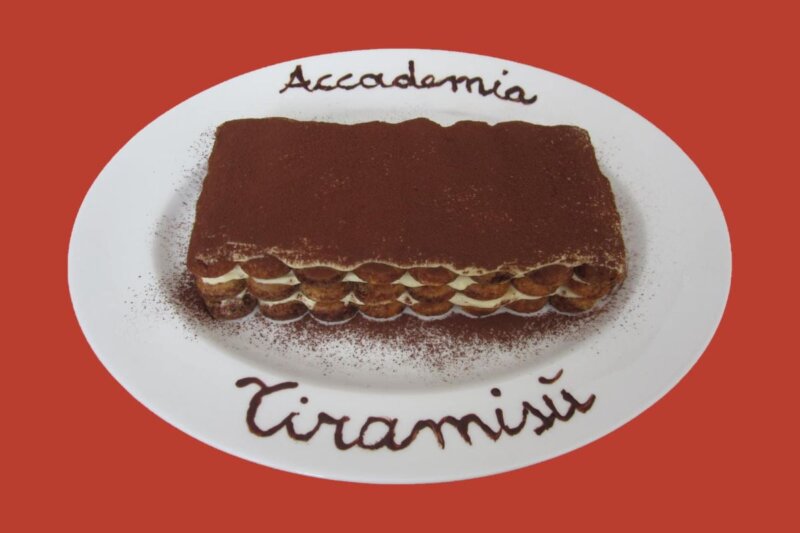
Tiramisu is a traditional sweet and food product spread throughout the Italian territory, whose origins are debated and are attributed above all to Veneto and Friuli-Venezia Giulia. It is a spoon dessert made from ladyfingers (or other crumbly biscuits) soaked in coffee and covered with a cream, composed of mascarpone, eggs, and sugar, which in some variations is flavored with liqueur. Tiramisu is among the most loved desserts by Italians, the most requested by foreigners in Italy and has an unchallenged reputation in the world. The Accademia ofTiramisù is a cultural and food and wine association, inspired by the principles of historical, cultural and gastronomic information. Its aim is to disseminate the true geographic origins and the authentic ingredients for the traditional recipe.

Reale Restauri, azienda specializzata nel restauro di lampadari di piccole medie e grandi dimensioni, dai lampadari muranesi rezzonici ai lampadari Maria Teresa a quelli in bronzo dorato e non, einsomma tutto quello che fa luce da noi trova il punto qualifificato per riprendere lo splendore originale senza perdere il fascino del tempo passato, il tutto trattato con passione e profesionalità unica nel suo genere, da noi si sono appoggiati enti statali grand'hotel prestigiosi. Uno staff esperto e professionale, guidato dal “capomastro” Francesco è a vostra completa disposizione per visionare e studiare quale soluzione sia la più adeguata alle numerose problematiche possibili, consci del fatto che un restauro improvvisato, eseguito da mani inesperte, può causare danni irreversibili sia per la sicurezza dell’apparecchio che per la conservazione estetica e materiale dell’opera. La nostra missione è di preservare al meglio non solo il valore funzionale dell’opera, ma anche il suo valore storico, artistico e testimoniale. Restaurare un lampadario antico è un arte, come ridonare luce a vecchi ricordi, per non fare scomparire la poesia di un’epoca, ma anzi, per ridonare poesia a un presente che sembra l’abbia persa.

Dalla City all’azienda di famiglia nel grossetano. Due mondi forse agli antipodi, sicuramente molto distanti tra loro, ma non per Guido Pallini, 33 anni, che dopo aver lasciato il suo lavoro come banchiere d’investimento a Londra, ha preso la decisione di tornare alle sue radici nella fattoria di famiglia, un’attività di allevamento di bufale per la produzione di latte. Pallini ha sempre coltivato la visione di trasformare questa azienda agricola in rapido declino in un’azienda di produzione di formaggio. Integrare altre attività nel loro funzionamento hanno contribuito a rendere l’azienda più sostenibile. Oggi La Maremmana è una fabbrica di formaggio a pasta filata di formaggio di bufala prodotto esclusivamente con il latte del proprio bestiame. Dalla mozzarella di bufala alla burrata fino alla ricotta fresca, il sogno di Pallini di salvare l’azienda di famiglia è diventato realtà.
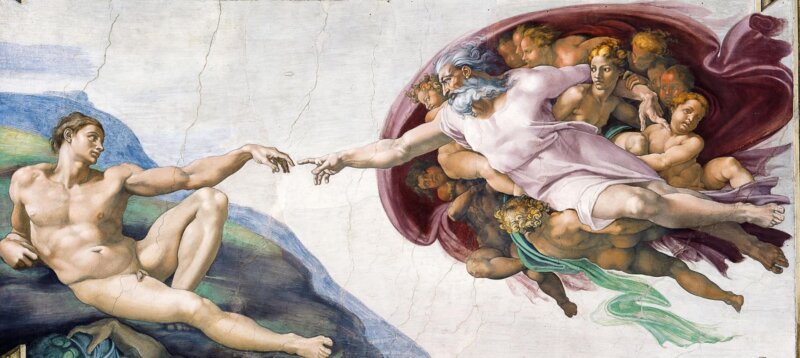
Michelangelo di Lodovico Buonarroti Simoni (6 March 1475 – 18 February 1564), known best as simply Michelangelo, was an Italian sculptor, painter, architect, and poet of the High Renaissance born in the Republic of Florence, who exerted an unparalleled influence on the development of Western art. Considered by many the greatest artist of his lifetime, and by some the greatest artist of all time, his artistic versatility was of such a high order that he is often considered a contender for the title of the archetypal Renaissance man, along with his rival, the fellow Florentine and client of the Medici, Leonardo da Vinci. A number of Michelangelo's works of painting, sculpture and architecture rank among the most famous in existence. He sculpted two of his best-known works, the Pietà and David, before the age of thirty. Despite holding a low opinion of painting, he also created two of the most influential frescoes in the history of Western art: the scenes from Genesis on the ceiling of the Sistine Chapel in Rome, and The Last Judgment on its altar wall. Michelangelo was the first Western artist whose biography was published while he was alive. In his lifetime, Michelangelo was often called Il Divino.
.
.