
Pantheon of Agrippa

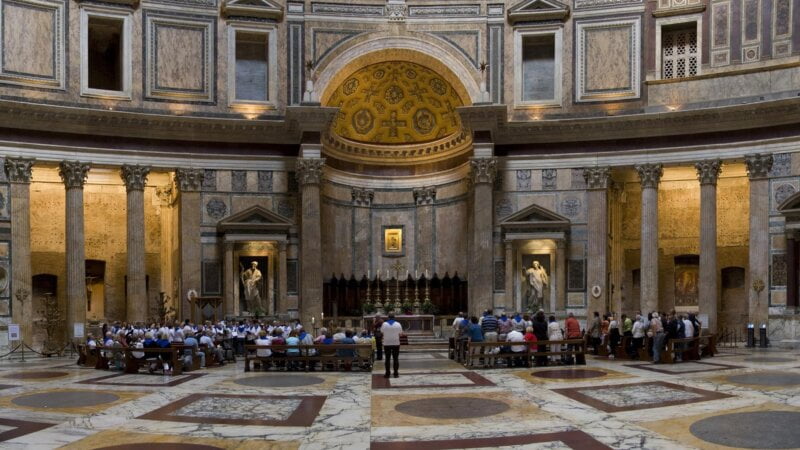
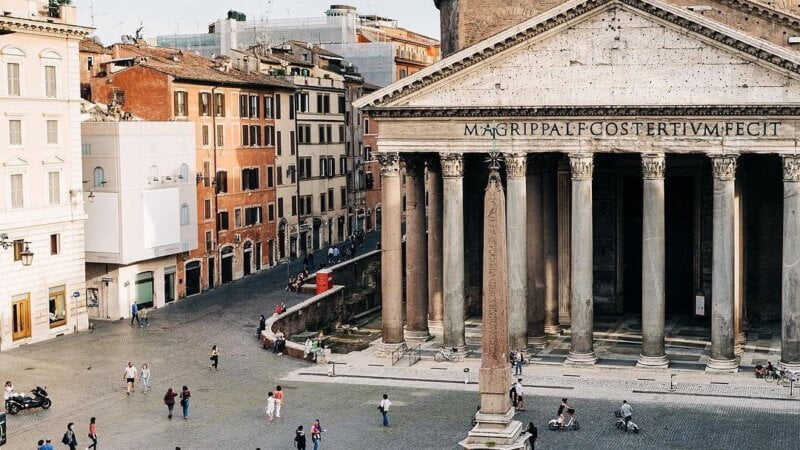
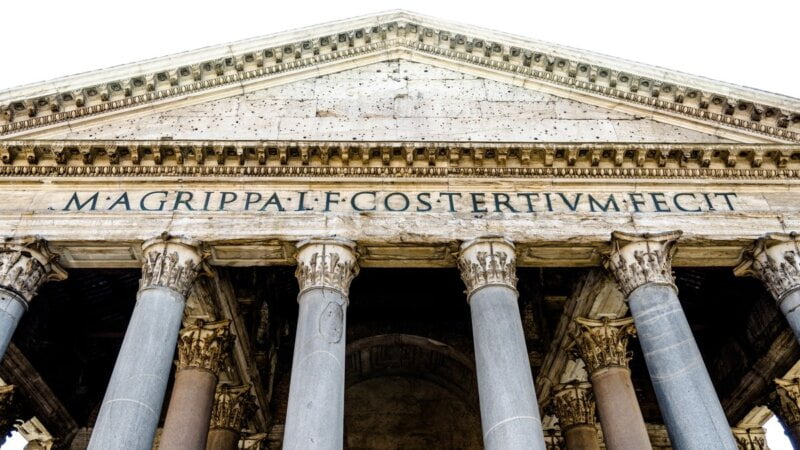
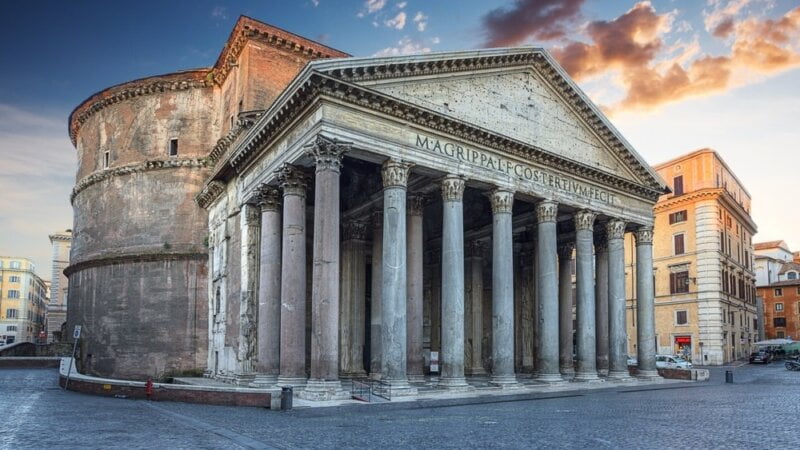
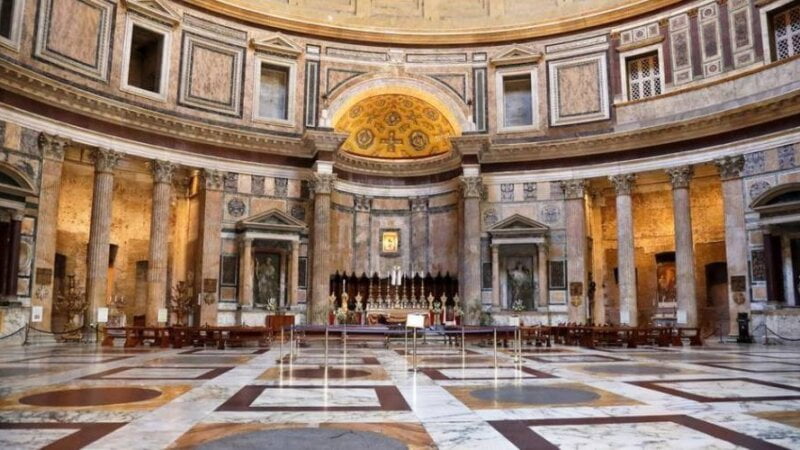
Built by Agrippa between 25 and 27 BC, the Pantheon was a temple dedicated to the twelve Gods and to the living Sovran. Traditionally, it is believed that the present building is the result of the radical reconstruction by Hadrian between 118 and 125 AD. It is the only ancient Roman building that has remained practically intact through the centuries. In 608 Pope Boniface IV had the remains of many martyrs removed from the Christian catacombs and placed in the Pantheon.
Thereafter, the temple was officially converted to Christianity and named Saint Maria ad Martyres. The Pantheon was an inspiration to Raphael, one of the greatest architects of the Renaissance, and he requested it be his place of eternal rest.
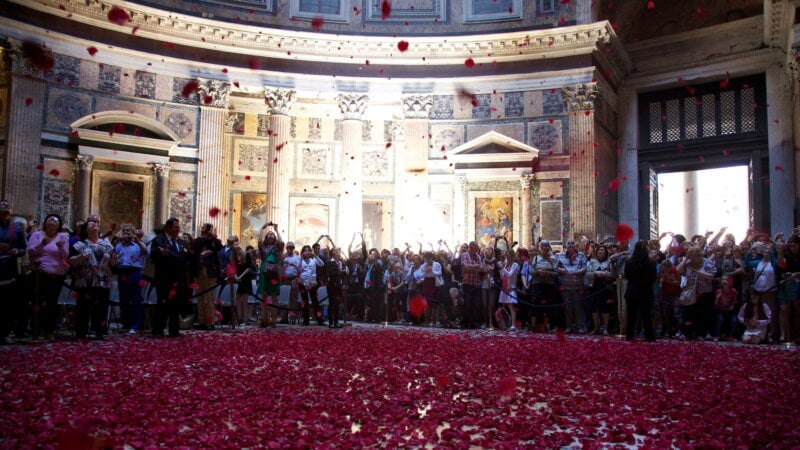
The Basilica is still a church, where Christian worship is celebrated continuously and which it considers essential to accompany the celebrations with commitments of solidarity.
Il Pantheon rappresenta, da più di duemila anni, l’espressione massima della gloria di Roma. La sua storia si lega in maniera indissolubile allo sviluppo della città eterna di cui è immagine nei secoli. Il Pantheon fu ispirazione dei più grandi architetti del Rinascimento, tanto che Raffaello volle farne il luogo del proprio riposo eterno.
Nel 27 a.C. Marco Vipsanio Agrippa, genero, amico e collaboratore del primo imperatore Augusto fece costruire questo tempio, dedicandolo alle sette divinità planetarie. Ad esse si deve il nome di Pantheon, che, in greco, significa “di tutti gli Dèi”. L’edificio originario, che doveva essere di dimensioni ridotte rispetto a quello attuale, fu riedificato da Adriano tra il 118 ed il 125 d.C. Nel ricostruirlo, Adriano non tenne conto dell’impostazione di Agrippa: rovesciò l’orientamento dell’edificio di 180 gradi e aprì davanti al nuovo tempio una grande piazza porticata.
Il Pantheon, chiuso e abbandonato sotto i primi Imperatori cristiani e successivamente saccheggiato dai barbari, nel 609 d.C. fu donato dall’Imperatore bizantino Foca a Papa Bonifacio IV. Papa Bonifacio IV consacrò il tempio dedicandolo a Santa Maria ad Martyres. Il riferimento ad una schiera collettiva cristiana fu voluto in contrapposizione all’antica dedica pagana a tutti gli dèi di Roma.
La Basilica è, tuttora, una chiesa, dove viene celebrato, con continuità, il culto cristiano e che considera essenziale accompagnare le celebrazioni con impegni di solidarietà.