
Notre Dame Cathedral of Tournai

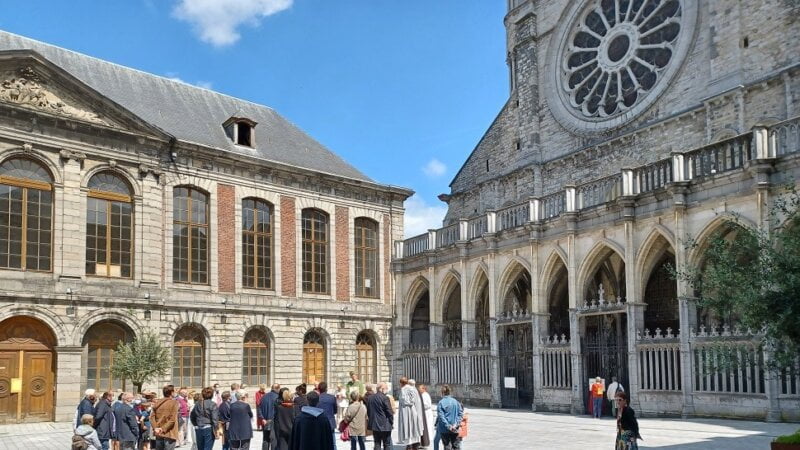

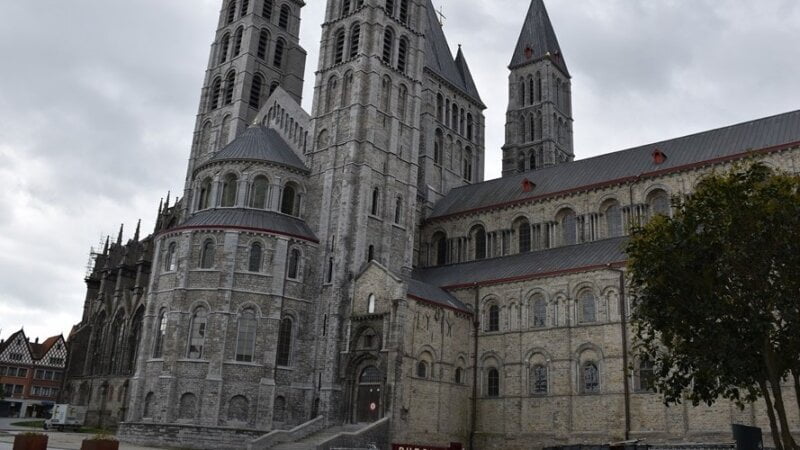
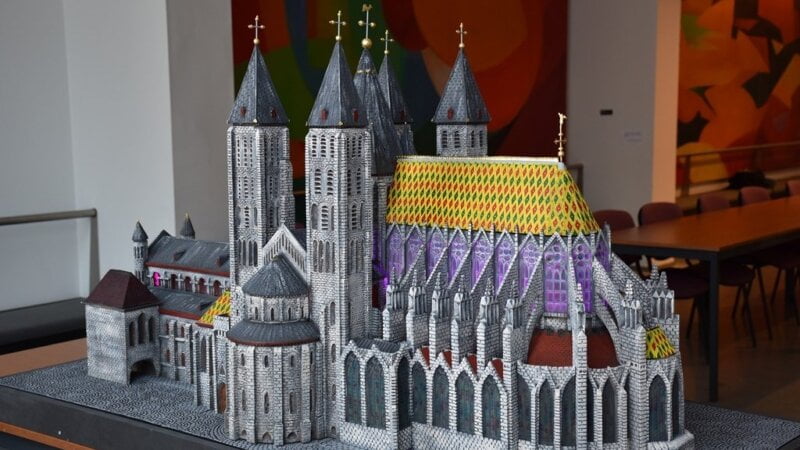
The transept arms, built in about the mid-12th century, have apsidal ends, a feature borrowed in all probability from certain Rhenish churches, and which would appear to have made its influence felt in the northeast of France, as at Noyon and Soissons. The square towers that flank the transept arms reach a height of 83 metres (272 ft). They vary in detail, some of the arcade work with which they are enriched being in the round-arched and some in the pointed style. West portico.
Bishop Gautier de Marvis (1219-1252) had the earlier Romanesque choir demolished in the 13th century, in order to replace it with a Gothic choir of much grander dimensions, inspired by the likes of Amiens Cathedral. The construction of the new choir began in 1242, and ended in 1255. The rest of the cathedral was supposed to be rebuilt in the same style as the choir, but this was never attempted, the only later additions being the western porch, and a large Gothic chapel which was built alongside one of the side aisles, whose original walls and windows disappeared in the process.
The rood screen is a Renaissance masterpiece by Flemish sculptor Cornelis Floris and dates from 1573. The cathedral was damaged by a severe tornado on the 24 August 1999. Assessment of the damage revealed underlying structural problems and the cathedral has been undergoing extensive repairs and archaeological investigation ever since. The Brunin Tower was stabilised in 2003. In recognition of Tournai cathedral’s cultural value, UNESCO designated the building a World Heritage Site in the year 2000.