
Newgrange


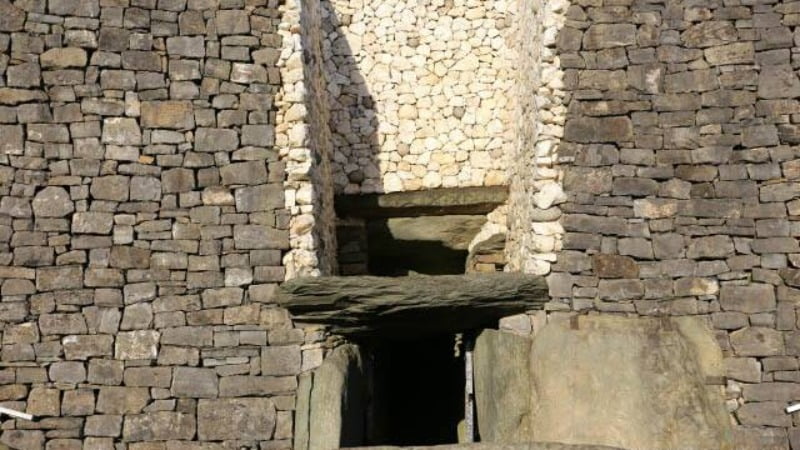
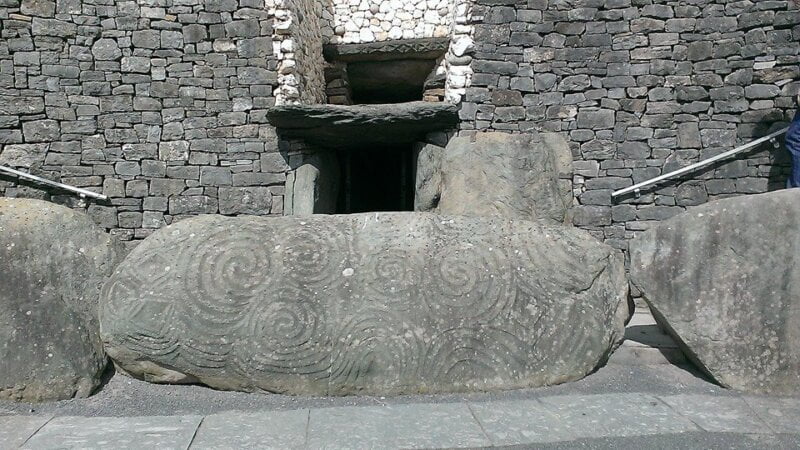
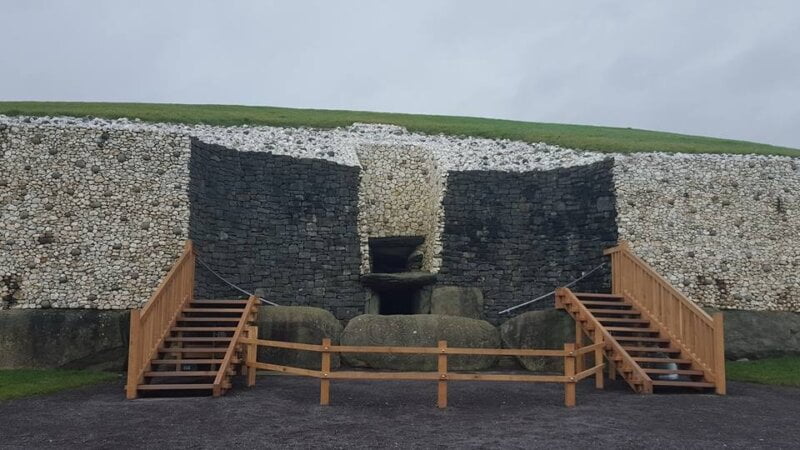


These basins which are on the floor of each of the recesses held the remains of the dead. The remains of at least five people were recovered during excavation, although originally much more bone may have been placed there. Most of the bones found were cremated, although small amounts were unburned. Grave goods of chalk and bone beads and pendants as well as some polished stone balls were placed with the dead. The entrance stone at Newgrange and Kerbstone 52 at the back of the mound are highly accomplished pieces of sculpture, regarded as some of the finest achievements of European Neolithic art. Many more of the kerbstones are also carved, some of them with carving on the side facing inwards. In the passage, some of the stones are beautifully carved particularly the 19th stone on the left, has a design which some visitors say reminds them of a stylised face. In the chamber in the back recess on the right hand side is the world famous tri-spiral design. A circle of standing stones also surrounds Newgrange. Its purpose is unclear, although recent research indicates that it could have had an astronomical function. The Stone Circle was erected sometime after 2000BC since excavation have shown that one of the stones of the circle lies directly on top of the Early Bronze Age Pit Circle. Originally there may have been more stones in the circle. Possibly some were broken up over the years. This was the final phase of building at Newgrange.