
Sassi di Matera

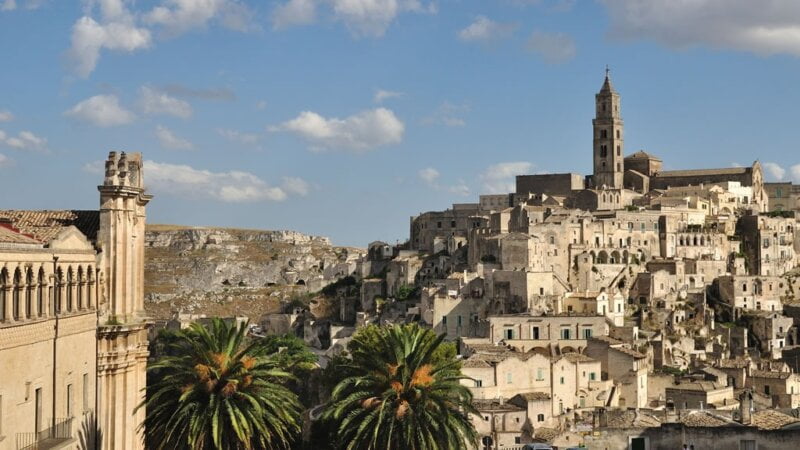
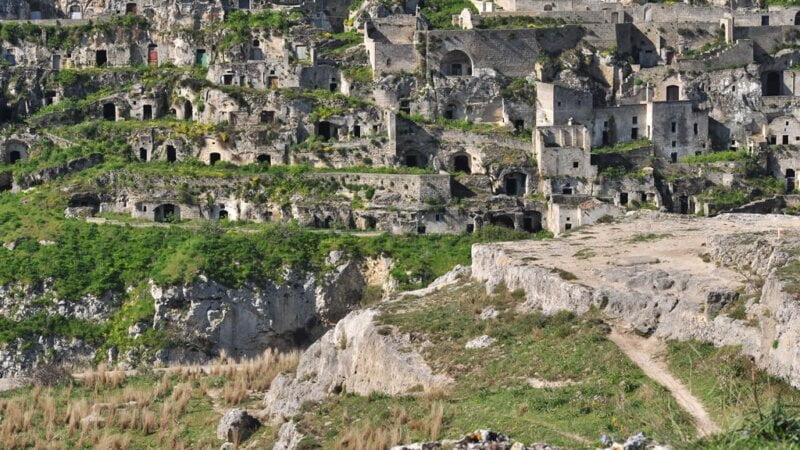
The Sassi di Matera quarters were listed as a World Heritage Site by UNESCO in 1993. They are a unique place with extraordinary charm that shows how man has lived in a fairytale-like environment for thousands of years: both the Sassi districts and the surrounding area – comprised by the Parco Archeologico Storico Naturale for the most part – are characteristically rocky. The sassi quarters are connected to the current town centre all throughout, admittedly there are many streets and alleys that lead down to the old town.
Initially, the Sassi di Matera were just a rocky area, very similar to the opposite side of the canyon created by the Gravina river. The western side of the canyon is made up of a steep side overlooking the stream, along with several hills and terraces more suitable for human habitation. As time went on, these places transformed into villages and ultimately into a fully-fledged town. The first human settlements date back to the Palaeolithic age, and they developed in the many caves that characterize the local rocky landscape. Over time, the landscape has been increasingly modified by man, as the local sandstone is soft enough to be carved, meaning that it can be manipulated to create shelter.
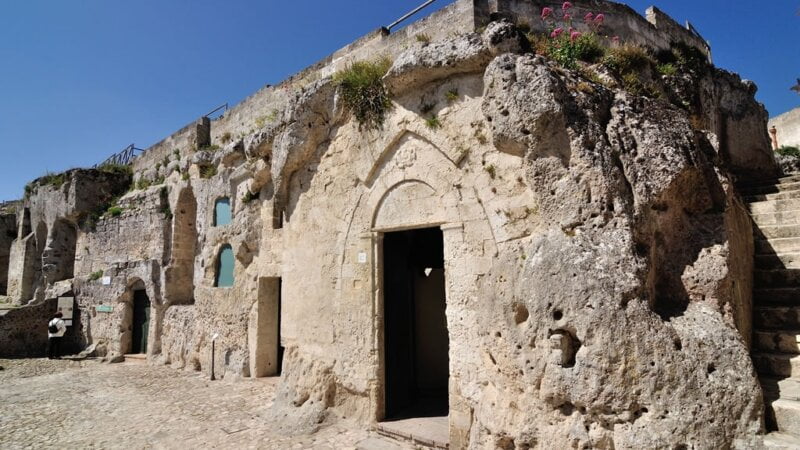
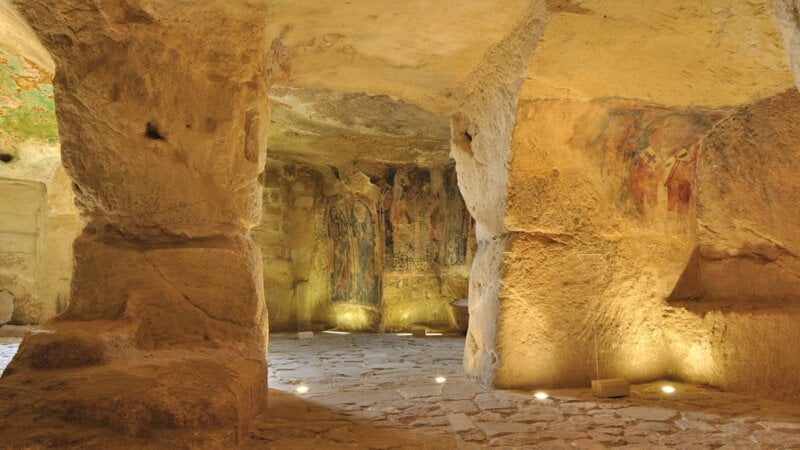
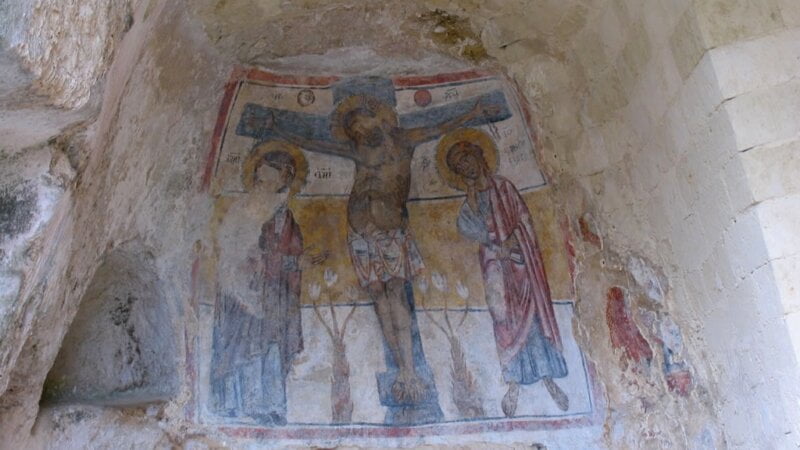
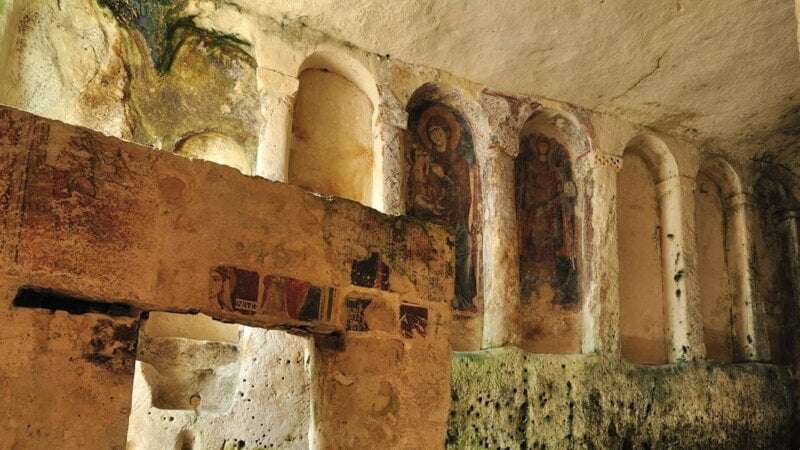
The caves that were dug in this period constitute the basis of urbanization, still visible in the buildings constructed during the last millennium. Hence, Matera has gone through the prehistoric phase, comprised of the Palaeolithic age, the neolithic age and the Iron Age, and later its history was strongly affected by the advent of Christianity, which quickly became culturally prevalent. During the Middle Ages, the landscape was transformed as a result of the systematic construction of a series of places of worship.
Today, the Sassi di Matera represent a fascinating cultural landscape, which is the reason why they are now part of the UNESCO World Heritage list. Architecturally, they encompass a mixture of different elements that were stratified over time, such as rock dwellings, cave churches and burial grounds that repeatedly alternate with buildings belonging to disparate time periods such as the Middle Ages, the renaissance, the baroque and the modern age.
As a matter of fact, caves, hypogea, palaces, churches, neighbourhoods, staircases, galleries and gardens all intertwine together, creating a magical and unique atmosphere in this place.