
Caffè Mulassano

Ma, nel cuore, le batteva forte la nostalgia: avrebbe dato l’America intera pur di tornare a Torino, la sua città natale. E così fu: nel 1925 Angela e Onorino Nebiolo, che nel frattempo avevano avuto due figli, tornarono in Italia con il proposito di gestire un locale tutto loro. In quei mesi la famiglia Mulassano aveva messo in vendita il proprio scrigno prezioso: il caffè Mulassano. Ai coniugi non parve vero e con i risparmi accumulati in America, comprarono il locale. La spesa: 300 mila lire di allora per la sola licenza.
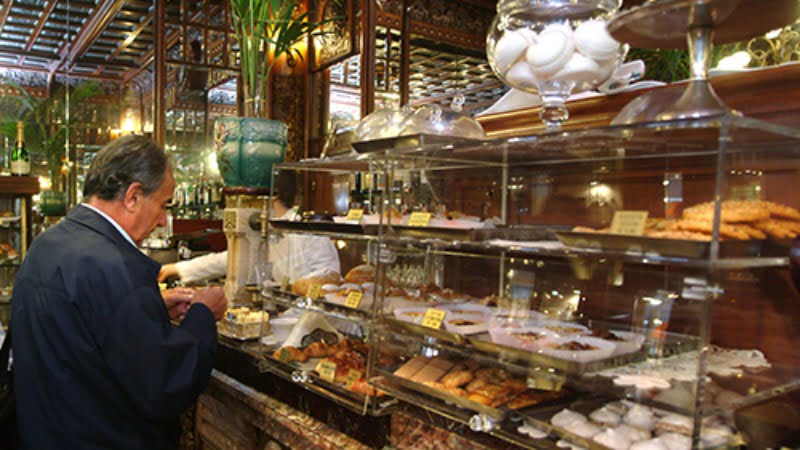
Con l’intento di ridare vigore agli affari del locale, cercarono di ideare delle nuove proposte da accompagnare all’aperitivo. Avevano portato con sé dagli States una macchina che tostava il pane: così importarono, per primi a Torino, il toast. Non paghi di questa innovazione, pensarono di utilizzare quel pane morbidissimo, usato per i toast, senza tostatura e con una speciale e più intensa farcitura: fu così che il signor Onorino inventò il tramezzino. Dapprima lo serviva in accompagnamento agli aperitivi, poi, visto il successo, lo propose per lo spuntino di mezzogiorno dei tanti impiegati e delle sartine di via Roma e via Po. Alcuni anni più tardi, Gabriele D’Annunzio gli diede il nome che ora conosciamo: “tramezzino”.
Furono anni intensi e di grandi successi; la buvette divenne popolarissima, come è oggi. Ci andava un giovane studente in medicina allora sconosciuto: Achille Mario Dogliotti; ci tornò spesso anche da affermato chirurgo. Per l’aperitivo venivano Luigi Spazzapan e Italo Cremona, Gigi Chessa e Giacomo Grosso, Gigetta Morano e Caterina Boratto. La Torino dell’arte e del cinema oltre che la Torino d’ogni giorno. Fra i più assidui Mario Soldati e Gianandrea Gavazzeni che hanno frequentato il Mulassano per decenni.
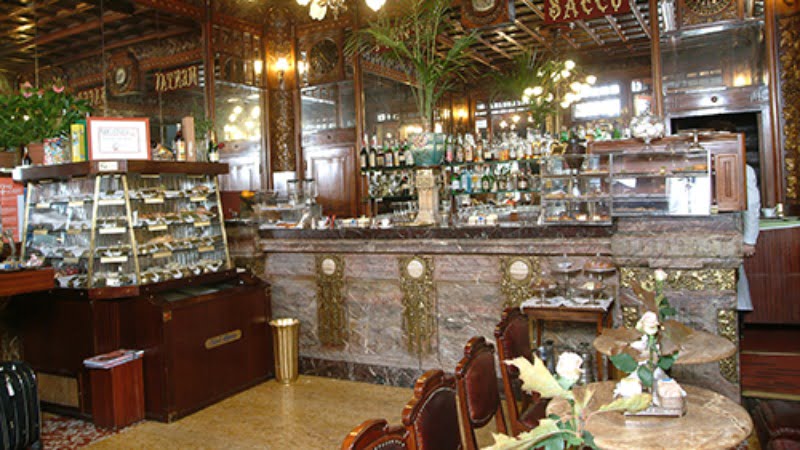
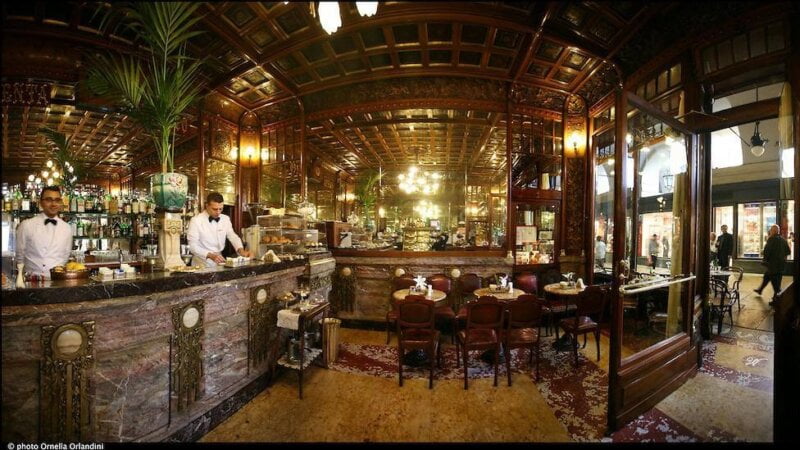
Nel 1938 i coniugi Nebiolo vendettero il locale per andare a gestire alcuni cinematografi della periferia e il locale, con la guerra conobbe un periodo di declino. I suoi tesori sparirono sotto la calce. Negli anni ’70 il Mulassano è tornato quello del commendatore Amilcare e di Onorino grazie ad un accurato restauro che l’allora titolare, Antonio Chessa, svolse con grande pazienza e sapienza. La nipote di Antonio Chessa, Vanna, insieme a un nuovo socio Patrizio Abrate, ne conserva oggi la tradizione e la cura, illuminati da quella passione per la quale lo zio ha dedicato una vita. Oggi il locale è come fu pensato da Antonio Vandone e rimane patrimonio della città di Torino e di chi ne vuole godere la bellezza.
The activity of the Mulassano company began in the second half of the 19th century, with the opening of a bottle shop in via Nizza 3. The then owner, Amilcare Mulassano, was also the owner of the renowned Sacco Distillery, producer of the famous mint syrup. In 1907, the restaurant was then moved to the more central Piazza Castello, a place it has never left. During the first few years the place was transformed into a café.
Angela Nebiolo had gone as a child bride to Detroit, in the United States, where her husband and in-laws ran restaurants and nightclubs. He was 15. Work did not scare her: she was passionate about that new and frenetic world: she discovered the car, got her driving license very young. But nostalgia beat strongly in her heart: she would have given the whole of America to return to Turin, her hometown. And so it was: in 1925 Angela and Onorino Nebiolo, who in the meantime had had two children, returned to Italy with the intention of running their own place. In those months the Mulassano family had put their precious treasure chest up for sale: Mulassano coffee. To the spouses it didn’t seem real and with the savings accumulated in America, they bought the place. The cost: 300 thousand lire at the time for the license alone.
With the intention of reviving the business of the place, they tried to come up with new proposals to accompany the aperitif. They had brought with them from the States a machine that toasted bread: so they were the first to import toast in Turin. Not satisfied with this innovation, they thought of using that very soft bread, used for toast, without toasting and with a special and more intense filling: this was how Mr. Onorino invented the sandwich. At first he served it as an accompaniment to aperitifs, then, given its success, he proposed it for the midday snack of the many employees and tailors of via Roma and via Po. A few years later, Gabriele D’Annunzio gave it the name we now know: “sandwich”. They were intense and successful years; the buvette became hugely popular, as it is today. A young medical student then unknown went there: Achille Mario Dogliotti; he also often returned as a well-known surgeon. For the aperitif came Luigi Spazzapan and Italo Cremona, Gigi Chessa and Giacomo Grosso, Gigetta Morano and Caterina Boratto. The Turin of art and cinema as well as the Turin of every day. Among the most assiduous Mario Soldati and Gianandrea Gavazzeni who have frequented the Mulassano for decades.
In 1938 the Nebiolo couple sold the place to go and manage some cinemas in the suburbs and the place, with the war experienced a period of decline. His treasures disappeared under the lime. In the 1970s Mulassano returned to that of Commendatore Amilcare and Onorino thanks to an accurate restoration that the then owner, Antonio Chessa, carried out with great patience and wisdom. Antonio Chessa’s niece, Vanna, together with a new partner Patrizio Abrate, today preserves the tradition and care, enlightened by that passion for which the uncle dedicated a life. Today the place is as it was thought by Antonio Vandone and remains the heritage of the city of Turin and of those who want to enjoy its beauty.