
Schönbrunn Palace

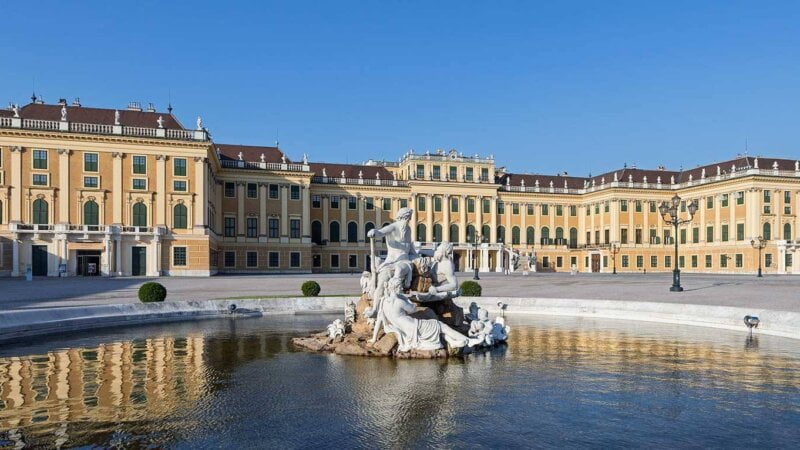
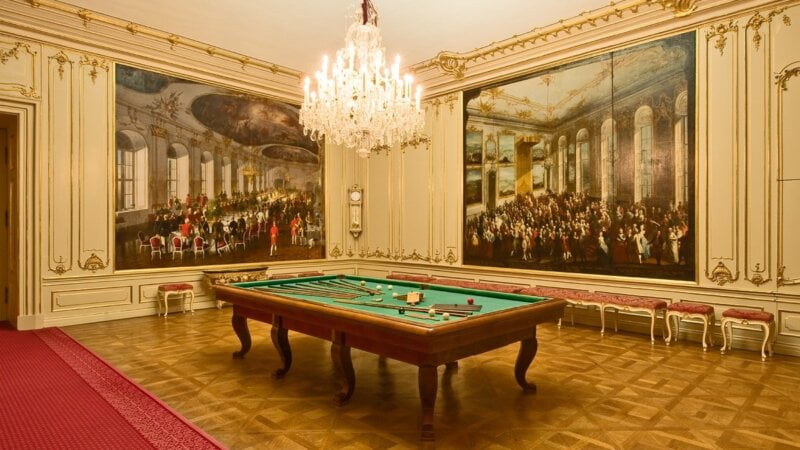


Das kaiserliche Lustschloß Schönbrunn, Ehrenhofseite by Bernardo Bellotto, 1759-1760 During the next century, the area was used as a hunting and recreation ground. Eleonora Gonzaga, who loved hunting, spent much time there and was bequeathed the area as her widow’s residence after the death of her husband, Ferdinand II. From 1638 to 1643, she added a palace to the Katterburg mansion, while in 1642 came the first mention of the name “Schönbrunn” on an invoice. The origins of the Schönbrunn orangery seem to go back to Eleonora Gonzaga as well. The Schönbrunn Palace in its present form was built and remodelled during the 1740–50s during the reign of empress Maria Theresa who received the estate as a wedding gift. Franz I commissioned the redecoration of the palace exterior in the neoclassical style as it appears today.
Franz Joseph, the longest-reigning emperor of Austria, was born at Schönbrunn and spent a great deal of his life there. He died there, at the age of 86, on 21 November 1916. Following the downfall of the Habsburg monarchy in November 1918, the palace became the property of the newly founded Austrian Republic and was preserved as a museum. After World War II and during the Allied Occupation of Austria (1945—55), Schönbrunn Palace was requisitioned to provide office space for both the British Delegation to the Allied Commission for Austria, and for the headquarters for the small British Military Garrison present in Vienna. With the reestablishment of the Austrian republic in 1955, the palace once again became a museum. It is still sometimes used for important events such as the meeting between U.S. president John F. Kennedy and Soviet premier Nikita Khrushchev in 1961.
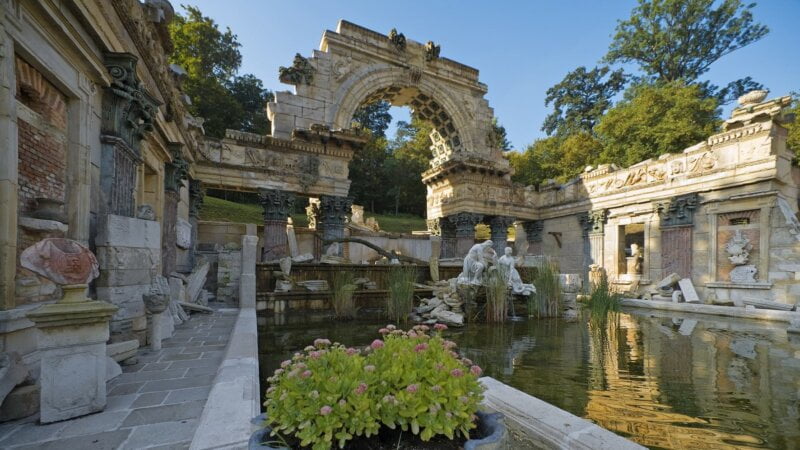
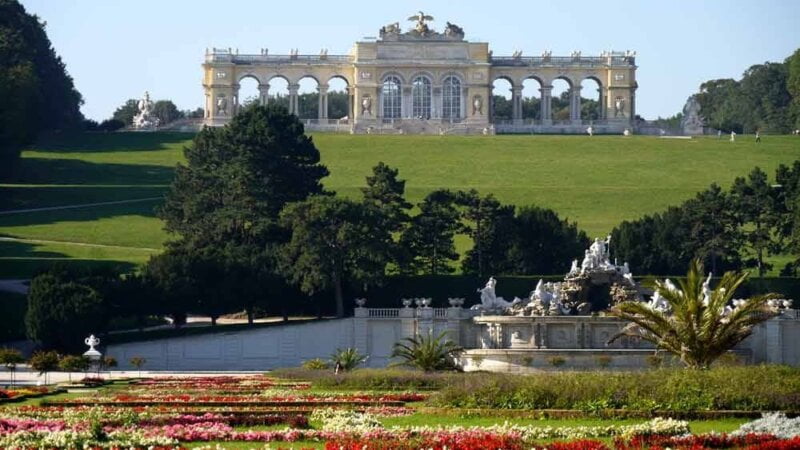
Since 1992 the palace and gardens have been owned and administered by the Schloss Schönbrunn Kultur-und Betriebsges.m.b.H., a limited-liability company wholly owned by the Republic of Austria. The company conducts preservation and restoration of all palace properties without state subsidies. UNESCO catalogued Schönbrunn Palace on the World Heritage List in 1996, together with its gardens, as a remarkable Baroque ensemble and example of synthesis of the arts.