
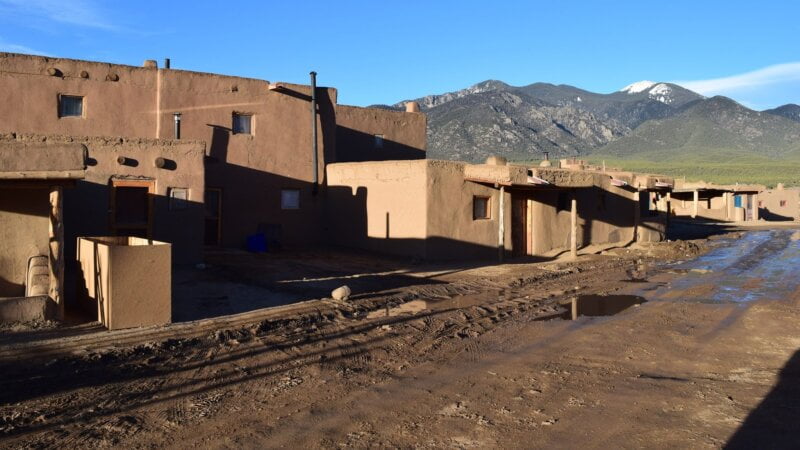
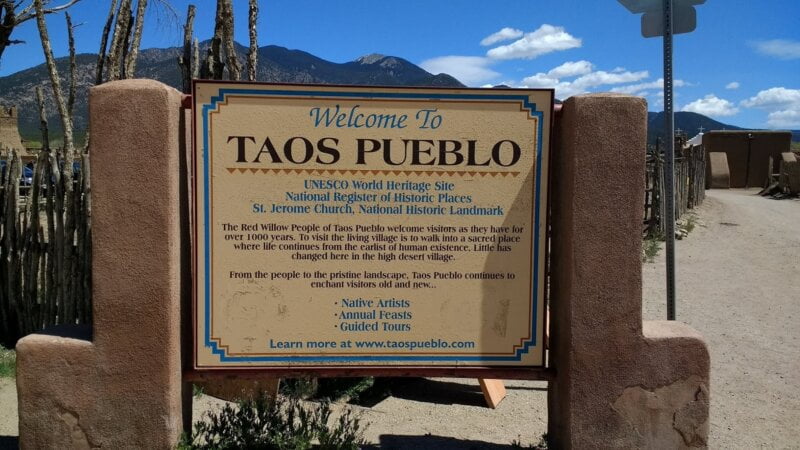
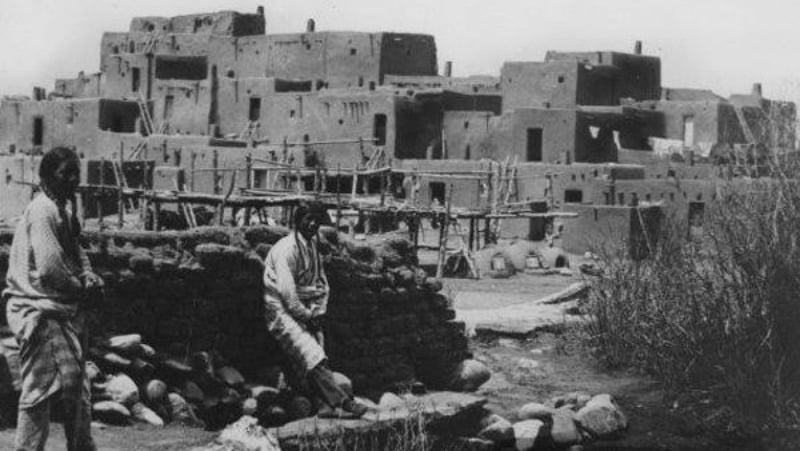
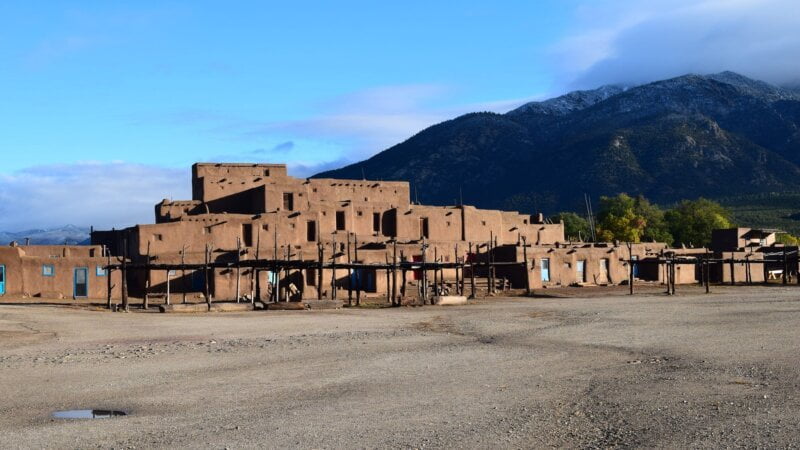
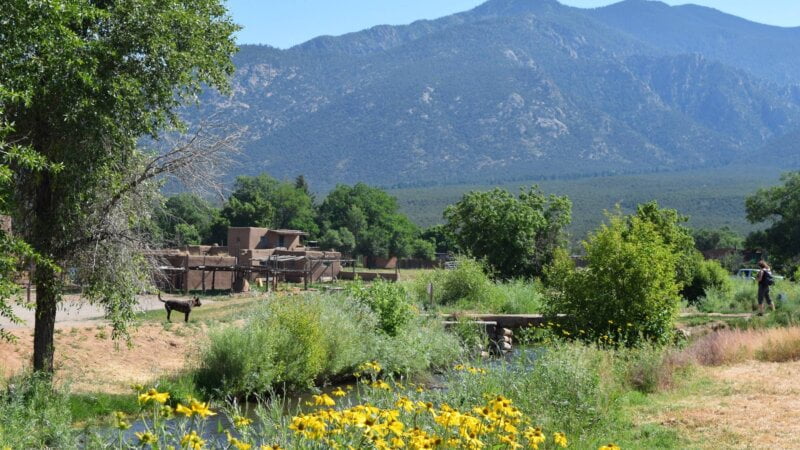
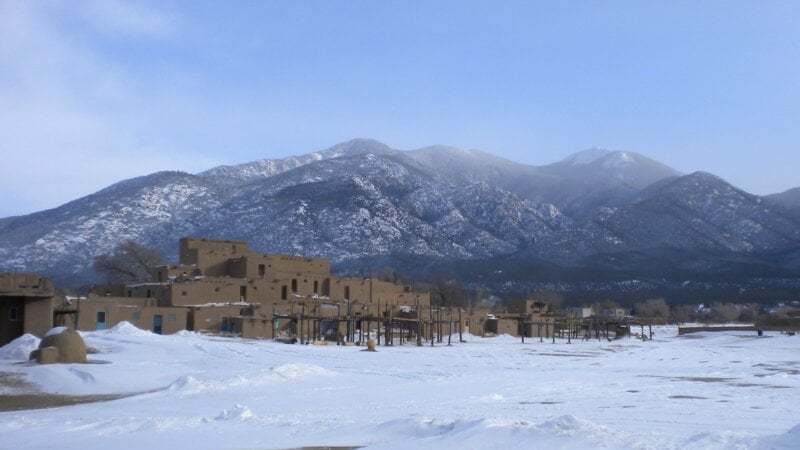
Taos Pueblo is the only living Native American community designated both a World Heritage Site by UNESCO and a National Historic Landmark. The multi-story adobe buildings have been continuously inhabited for over a 1,000 years. The Pueblo is 3 miles northeast of Taos Plaza. Archaeologists say that ancestors of the Taos Indians lived in this valley long before Columbus discovered America and hundreds of years before Europe emerged from the Dark Ages. Ancient ruins in the Taos Valley indicate our people lived here nearly 1000 years ago. The main part of the present buildings were most likely constructed between 1000 and 1450 A.D. They appeared much as they do today when the first Spanish explorers arrived in Northern New Mexico in 1540 and believed that the Pueblo was one of the fabled golden cities of Cibola. The two structures called Hlauuma (north house) and Hlaukwima (south house) are said to be of similar age. They are considered to be the oldest continuously inhabited communities in the United States.
The Pueblo is made entirely of adobe – earth mixed with water and straw, then either poured into forms or made into sun-dried bricks. The walls are frequently several feet thick. The roofs of each of the five stories are supported by vigas – large timbers hauled down from the mountain forests. Smaller pieces of wood – pine or aspen latillas – are placed side-by-side on top of the vigas; the whole roof is covered with packed dirt. The outside surfaces of the Pueblo are continuously maintained by re plastering with thin layers of mud. Interior walls are carefully coated with thin washes of white earth to keep them clean and bright. The Pueblo is actually many individual homes, built side-by-side and in layers, with common walls but no connecting doorways. In earlier days there were no doors or windows and entry was gained only from the top.