
Castello Ruspoli

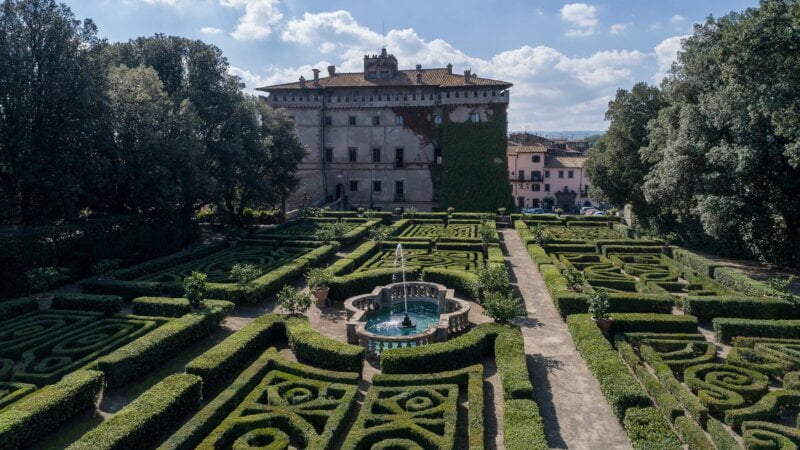
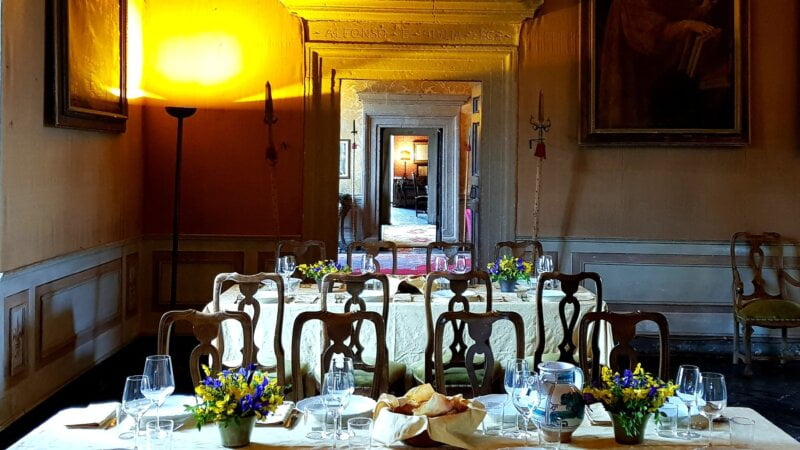
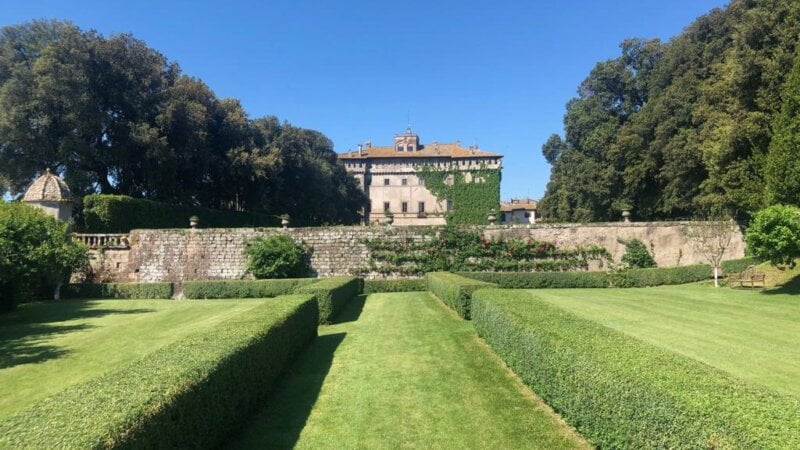
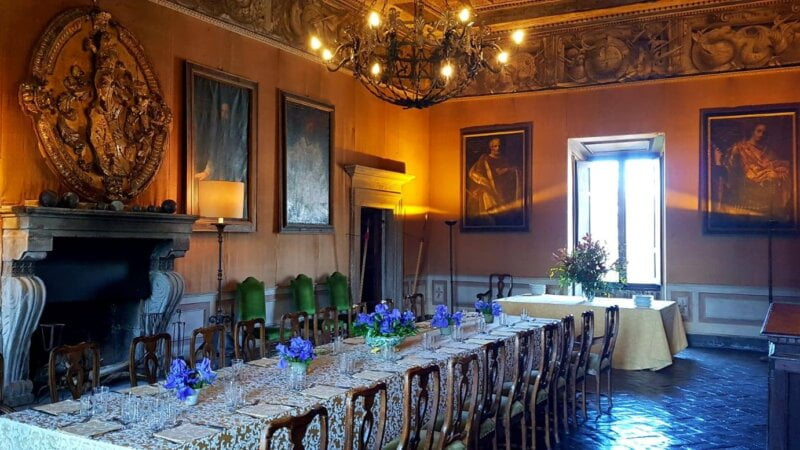


Il nome Ruspoli, antica famiglia fiorentina trasferita a Siena, venne incorporato a quello dei Marescotti nel 1704, a seguito del matrimonio dell’ultima ereditiera, Vittoria, con Sforza Vicino Marescotti. Ortensia Farnese trasformò la rocca in residenza pur mantenendo le caratteristiche architettoniche della fortezza. Il progetto fu dell’architetto Sangallo il Giovane e lo studio degli spazi esterni, tra cui la fontana centrale del giardino e l’ingresso originale, sono attribuiti a Jacopo Barozzi da Vignola.
The first traces of Ruspoli Castle date back to 847, when the structure was first built on the cliff where it lies. When Leo IV was Pope (847-855), this structure was converted into a monastery for the Benedictine monks, and was used as such until 1081. In about 1169, the castle became the source of a long-standing dispute between the Church and the Aldobrandini, Orsini, and Borgia families, which continued until the 16th century. In 1531, Pope Clement VII gave the castle to Beatrice Farnese Baglioni. Her daughter, Ortensia, was betrothed to Ercole Sforza Marescotti by Pope Paul III Farnese and the Castle Vignanello, as it was called at that time, was part of her dowry.
From that point on, it was referred to as Castle Marescotti. The name Ruspoli comes from an ancient Florentine family that moved to Siena and was united with the Marescotti family in 1704, when the family’s youngest heir, Vittoria, was given away in marriage to Sforza Vicino Marescotti. Ortensia Farnese converted the structure into a residence, while still maintaining the original characteristics of the cliff fortification. The state was designed by an architect named Sangallo il Giovane; however, the ideas for the exterior, including the garden, central fountain, and original entrance, are credited to Jacopo Barozzi da Vignola.
The garden, considered one of the most important in Italy, was created in 1611. Marcantonio Marescotti (3rd Earl of Vignanello and Parrano) was married to Ottavia Orsini, daughter of Vicino Orsini, creator of the sacred garden of Bomarzo. She planned and supervised the creation of the Renaissance garden parterre of Castello Ruspoli. Thanks to the restoration and preservation promoted by the family, it is known in Europe as one of the most well preserved gardens of that time.